The Rise of the AI Factory: Shifting the Metric to Cost Per Token
As organizations transition from AI pilots to massive production environments, NVIDIA is shifting the focus from hardware specs to 'cost per token.' This evolution emphasizes continuous AI factories that generate language and vision data at scale.
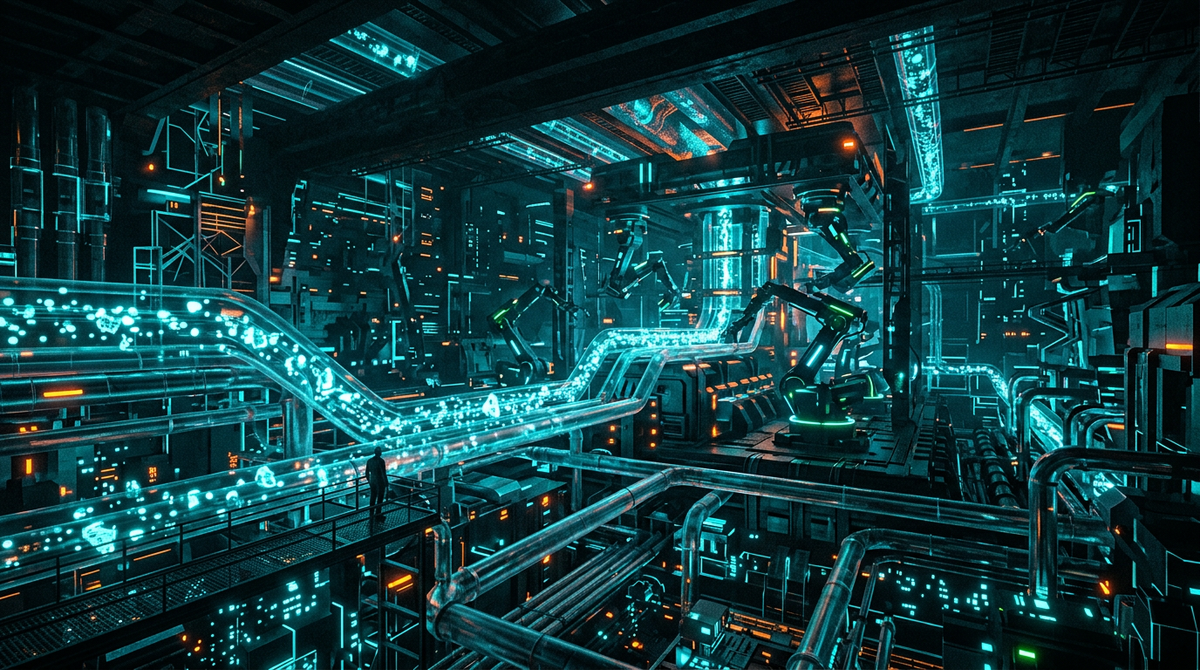
The landscape of Physical AI is undergoing a fundamental shift as the industry moves beyond the laboratory and into massive production environments. NVIDIA has signaled that the next era of compute will be defined by "AI factories"—continuously operating infrastructures designed to generate tokens at a scale previously reserved for heavy industrial manufacturing.
In this new paradigm, the metric for success is no longer just the raw peak performance of a single GPU, but the "cost per token." As AI agents begin to power everything from industrial digital twins to real-time robotic vision, the efficiency of inference at scale becomes the critical bottleneck. NVIDIA’s latest software stack aims to lower this cost, allowing enterprises to deploy complex multimodal models that can interact with the physical world in real-time without prohibitive operational expenses.
This transition highlights the growing need for specialized AI infrastructure that can handle the "tokenization" of the physical world—where sensors, cameras, and microphones provide constant streams of data that must be processed, understood, and acted upon instantaneously. By focusing on the full-stack optimization of inference, the industry is moving closer to a future where AI-driven physical systems are as ubiquitous and cost-effective as the cloud services of the previous decade.
Source: NVIDIA Blog