Work Over Hype: Why Shipyard Welding is the Ultimate Test for Humanoid Robots
While many humanoid startups focus on viral videos, Persona AI is targeting the gritty reality of shipyard welding as the first practical application for bipedal robots.
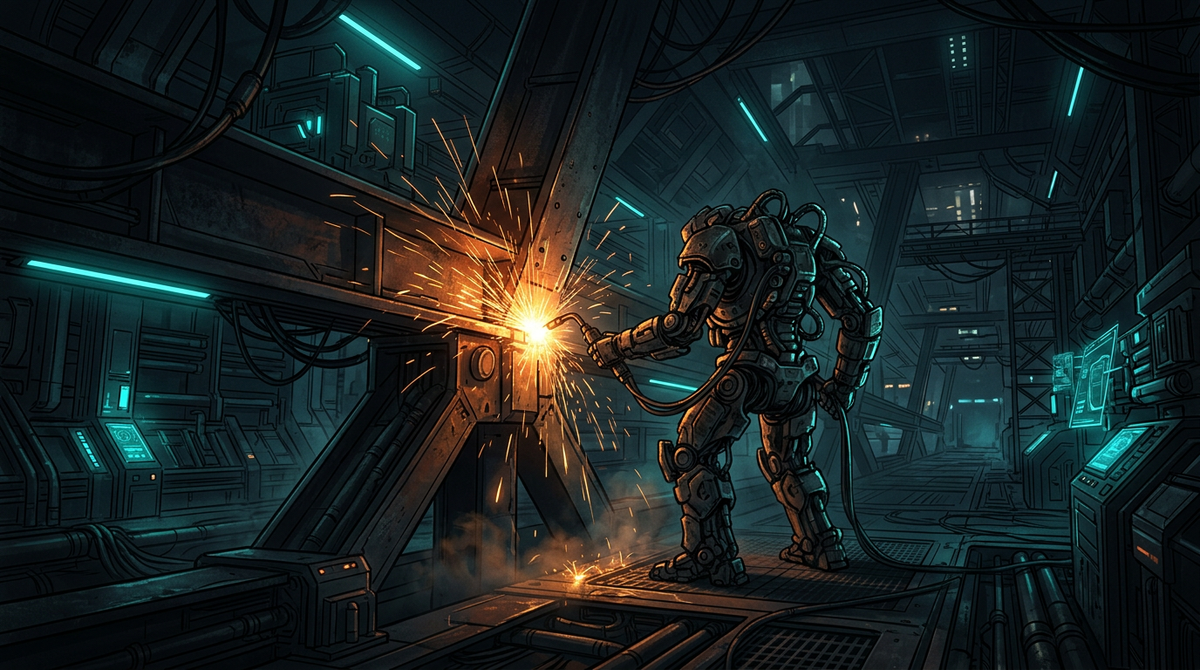
The humanoid robot hype cycle has reached a fever pitch, but a critical "readiness gap" remains between laboratory demos and industrial utility. While most companies are teaching robots to make coffee or walk across flat floors, Persona AI is focusing on shipyard welding—a job characterized by cramped spaces, high heat, and toxic fumes. This strategic pivot reflects a growing realization in the robotics industry: for humanoids to be viable, they must solve labor shortages in environments built for humans but dangerous for them.
Shipyard welding is an ideal "first job" for humanoids because it requires the dexterity of a human hand and the mobility of a bipedal form, yet takes place in a controlled enough industrial setting to limit the unpredictability of the general public. By focusing on this niche, Persona AI is bypassing the "general purpose" trap that has stalled other projects. The goal is to move from "research" to "production" by proving that a robot can perform a high-value, specialized task more reliably than a human in hazardous conditions.
This application-first approach is what the robotics sector needs to move past the "cool video" phase. If humanoids can master the sparks and tight angles of a shipyard, they will have proven their durability and precision in the most demanding physical arenas, paving the way for broader adoption in construction and heavy manufacturing.
Source: IEEE Spectrum