The Gamer’s Edge: Why Video Games are the Secret to Physical AI Mastery
Training models for the physical world requires more than just text. High-fidelity video game data is emerging as the secret sauce for teaching AI how to navigate and interact with complex 3D environments.
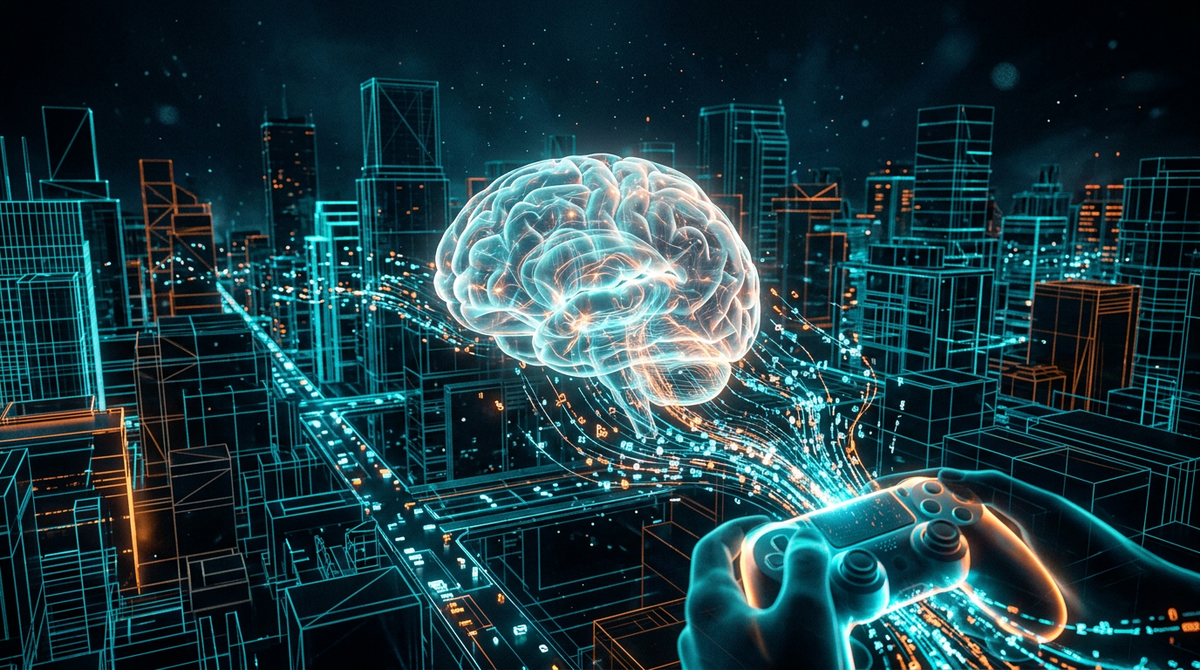
The quest for Artificial General Intelligence (AGI) has hit a bottleneck: text-based Large Language Models (LLMs) lack a fundamental understanding of physical reality. While ChatGPT can describe a cup falling, it doesn't "know" gravity or friction. To bridge this gap, startups are increasingly turning to video games as the ultimate training ground for Physical AI.
Physical AI requires an embodied understanding of space, motion, and consequence. High-fidelity game engines like Unreal Engine and Unity provide rich, labeled data that the internet’s messy sprawl of text cannot. By processing millions of hours of gameplay, AI models can learn the nuances of cause and effect in a safe, simulated environment before being deployed into hardware.
This approach isn't just about graphics; it’s about physics. Modern games simulate complex interactions—varying surfaces, lighting conditions, and unpredictable agent behaviors—that mimic the real world. For a robot to handle a glass of water or navigate a crowded sidewalk, it needs the "common sense" physics that gaming data provides. As investment flows into this space, the line between digital play and physical mastery continues to blur, positioning gaming data as the most valuable asset in the race for truly capable robotic brains.
Source: TechCrunch