Tesla’s Cybercab to Leverage Starlink for Uninterrupted Autonomous Connectivity
Tesla has revealed that its dedicated robotaxi, the Cybercab, will feature integrated Starlink satellite internet. This hardware integration suggests a strategic move to ensure constant connectivity for autonomous fleets in areas with poor cellular coverage.
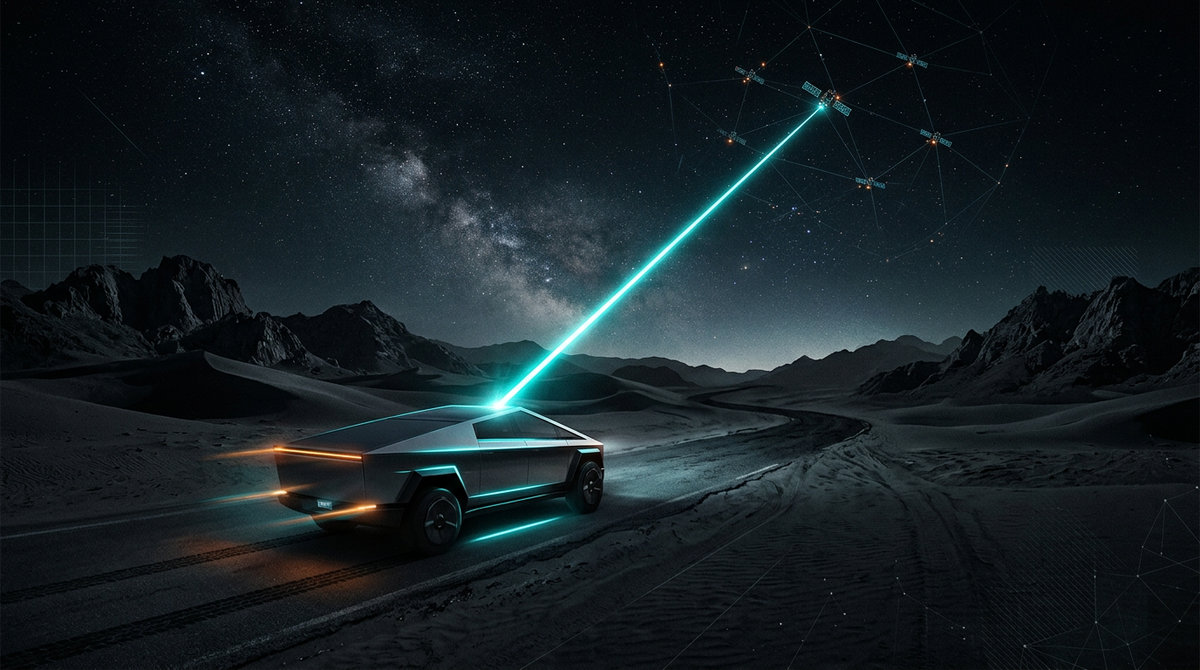
In a significant hardware update for its upcoming autonomous fleet, Tesla has confirmed that the "Cybercab" will come standard with integrated Starlink antennas. This marks the first time SpaceX’s satellite internet technology has been "directly integrated" into a Tesla production vehicle, moving beyond the aftermarket or experimental setups seen in the past.
The integration of Starlink addresses a critical hurdle for widespread autonomous vehicle (AV) deployment: connectivity dead zones. For a robotaxi fleet to operate safely and efficiently, it requires a robust link for real-time telemetry, remote assistance, and software updates. By bypassing traditional cellular networks, Tesla ensures that its vehicles remain "online" even in remote regions or during infrastructure failures that might paralyze a standard 5G-dependent fleet.
Beyond operational safety, the Starlink integration serves as a differentiator for passenger experience. As the Cybercab lacks a steering wheel or pedals, passengers will rely heavily on high-speed entertainment and communication during transit. This synergy between Elon Musk’s two largest ventures highlights a vertically integrated approach to the autonomous future, where space-based infrastructure provides the backbone for terrestrial robotic transportation.
Source: Electrek