Generative World Models: The New Frontier for Physical AI Training
Decart has unveiled Oasis 3, a real-time world model capable of simulating photorealistic driving environments. This breakthrough represents a shift toward generative AI replacing traditional physics engines for training autonomous systems.
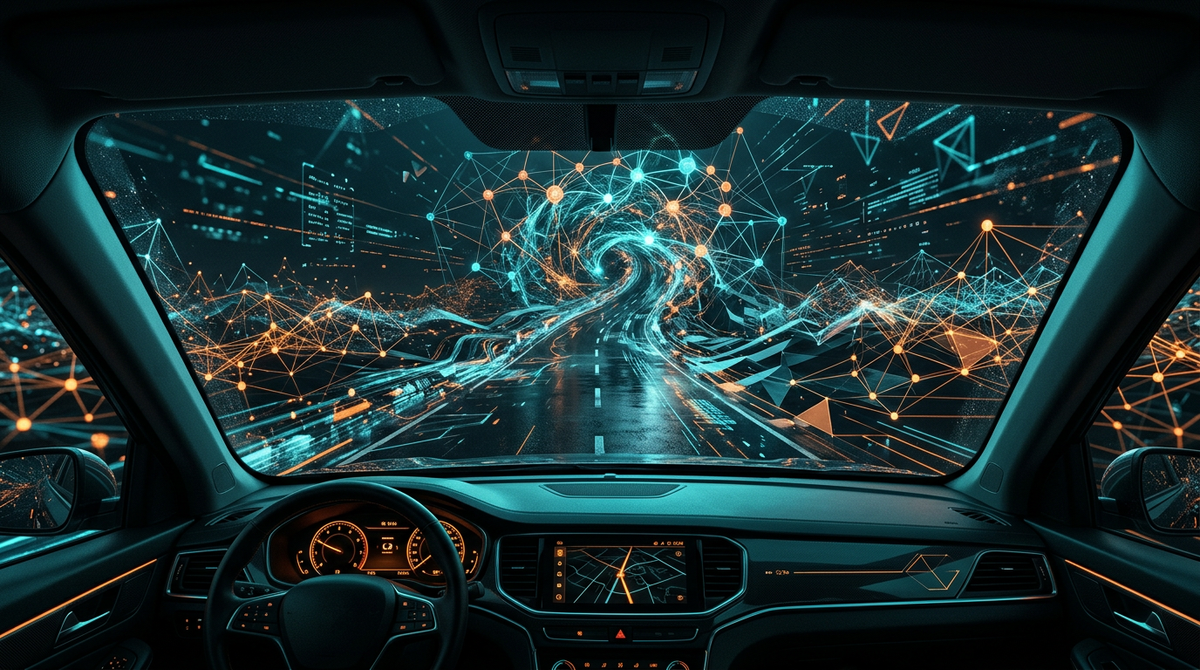
The boundary between simulation and reality is blurring with the launch of Decart’s Oasis 3, a transformative 'world model' that generates hours of photorealistic driving footage in real-time. Unlike traditional simulation environments that rely on rigid hand-coded physics and geometry, Oasis 3 uses generative AI to predict and render how the physical world reacts to vehicle inputs. This 'Physical AI' approach allows developers to test autonomous agents in a virtually infinite variety of edge cases without the computational overhead of classic rendering engines.
By processing vast amounts of video data, Oasis 3 learns the nuances of light, shadow, and object permanence. If a vehicle swerves, the model dynamically updates the environment to reflect that movement accurately. While the technology currently faces caveats—such as occasional temporal inconsistencies where objects might 'morph' over long durations—the implications for the industry are profound. It suggests a future where robots and vehicles learn to navigate by 'dreaming' through millions of miles of generated scenarios.
For the un-engineering community, this marks a pivot from deterministic simulation to probabilistic world-building. Access via a new API allows smaller startups to bypass the massive costs of physical fleet testing. As these models scale, the ability for an AI to internalize the 'rules' of the physical world through observation alone will be the defining metric of the next generation of autonomous systems.
Source: TechCrunch