Breaking the Memory Wall: How New Chip Architectures Power the SDV Transition
Researchers are developing new hardware abstraction layers and Compute-in-Interconnect (CIM) architectures to solve the 'memory wall' in Software-Defined Vehicles. These innovations allow SDVs to handle massive AI inference workloads while maintaining reconfigurable hardware flexibility.
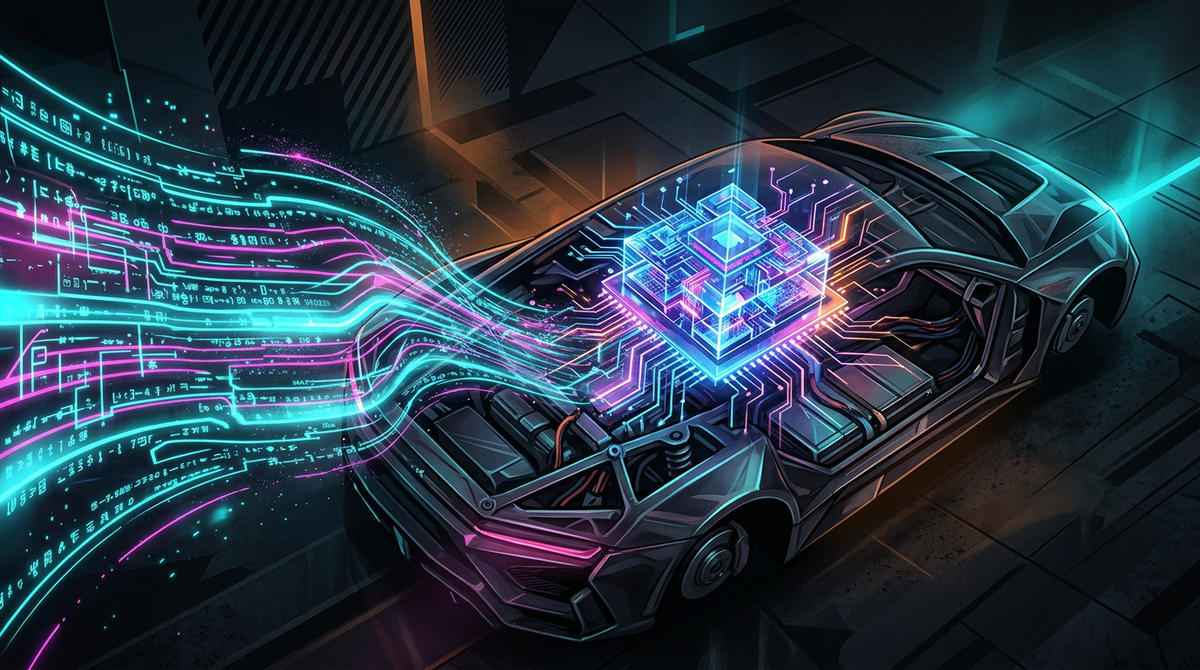
The Software-Defined Vehicle (SDV) paradigm is often limited by the "memory wall"—the bottleneck where data movement between the processor and memory consumes more power and time than the computation itself. Recent technical papers, including those from the National University of Singapore, are shedding light on a new generation of inference accelerators like CIMERA, which integrates compute-in-interconnect and memory with reconfigurable precision.
For the SDV, this means a shift away from static hardware architectures toward a fluid hardware-software stack. By utilizing hardware abstraction layers, automakers can decoule the life cycle of vehicle software from the underlying silicon. This allows for over-the-air (OTA) updates that don't just change the infotainment UI, but actually reconfigure how the vehicle processes sensor data for autonomy.
As vehicles move toward centralized "zonal" architectures, the ability to perform high-efficiency Large Language Model (LLM) inference—often used for voice assistants and complex decision-making—is paramount. These new semiconductor designs prioritize "intelligence per watt," ensuring that the SDV can support increasingly complex AI features without compromising the vehicle's electrical range or thermal management. The future of the SDV lies in this deep co-design of silicon and software.
Source: Semiconductor Engineering