Beyond Wheels: The Humanoid Compute Challenge
The rise of humanoid robots presents compute and security challenges that far exceed those of autonomous vehicles, requiring a new approach to industrial AI.
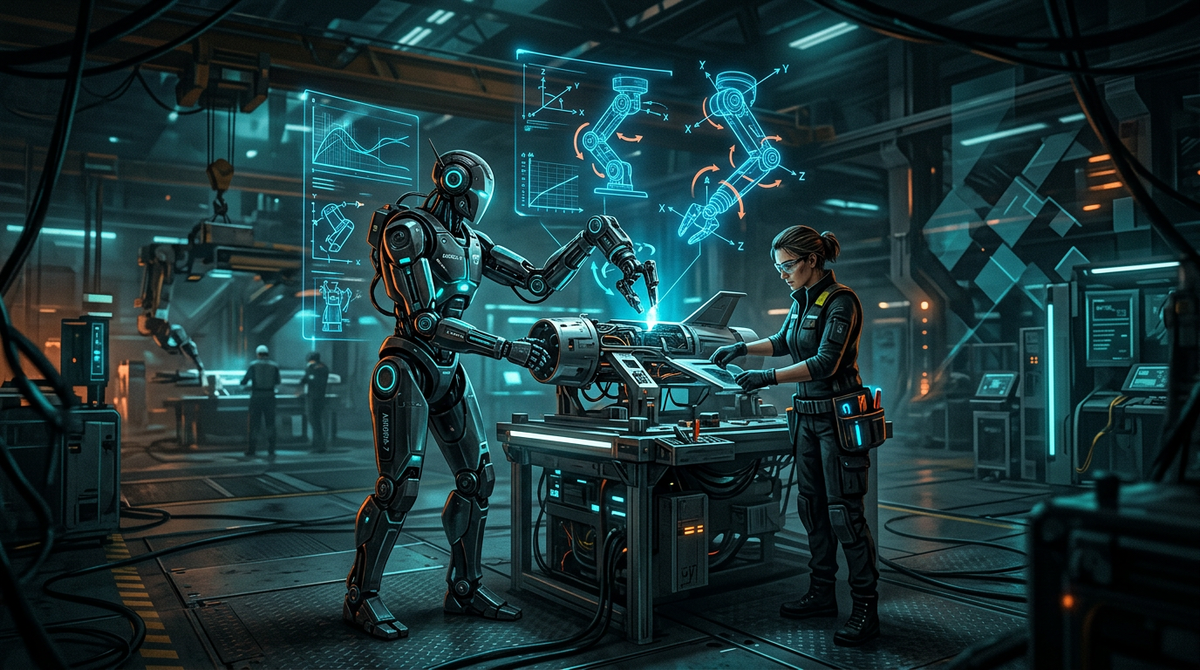
While autonomous vehicles (AVs) have dominated the robotics conversation for a decade, the emergence of humanoid robots—supported by massive investments in startups like Travis Kalanick’s "Atoms"—is introducing a new level of complexity. Unlike a car, which primarily moves in two dimensions and has a limited range of interactions, a humanoid robot has high degrees of freedom, including fingers, joints, and the ability to navigate through narrow, human-centric spaces.
From a compute perspective, this requires an exponential increase in processing power. A humanoid must simultaneously balance its center of mass, interpret tactile feedback from its sensors, and perform fine motor tasks. Security also takes on a new dimension: a hacked car is a kinetic weapon on wheels, but a hacked humanoid is an intruder inside a home or factory with the ability to manipulate tools and interact directly with humans. Industry leaders are now looking toward "Industrial AI" frameworks that can handle these complex multi-modal inputs while ensuring that physical safety protocols are hard-wired into the silicon, preventing software errors from resulting in superhuman accidents.
Source: Semiconductor Engineering