Lasers and 3D Printing: The New Frontier of Counter-UAS Warfare
The U.S. military is deploying directed energy weapons to counter cartel drones, while Japan approves 3D-printed interceptors to build a resilient defense.
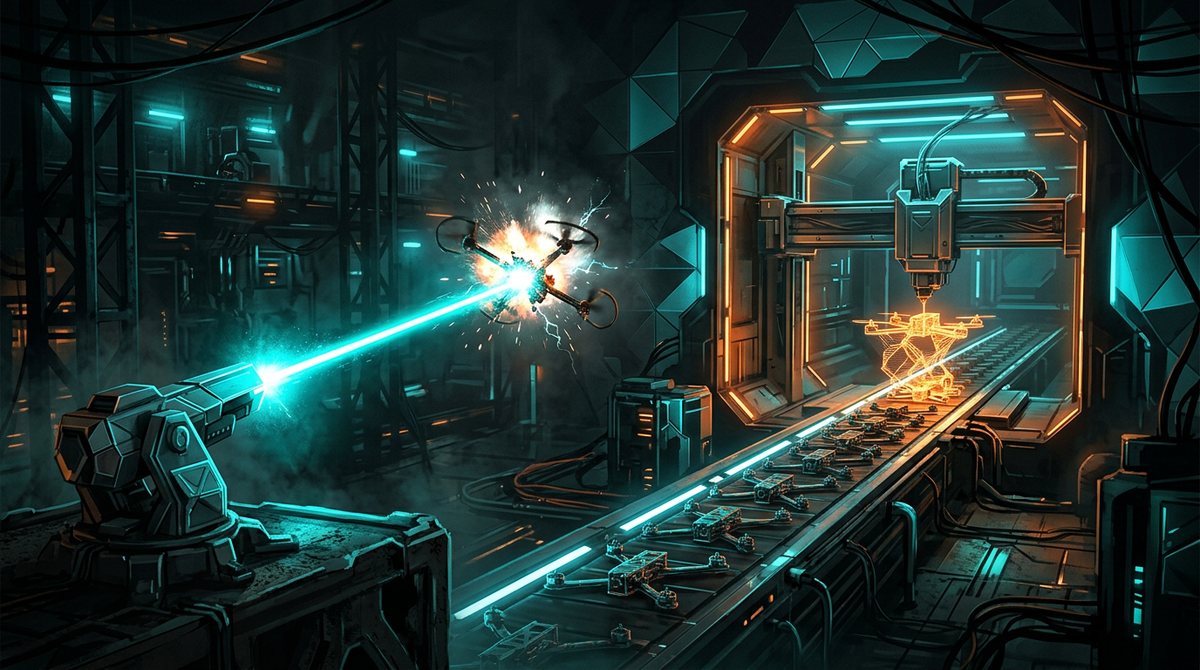
Neo-Defense technology has reached a turning point where automated threats are meeting automated defenses. In a recent operation in the Rio Grande Valley, the U.S. military successfully used laser systems to down three Mexican cartel drones, demonstrating the operational maturity of directed energy weapons in domestic security. Unlike traditional kinetic interceptors, lasers provide a "cost-per-shot" advantage that is essential when facing cheap, off-the-shelf drone threats.
Simultaneously, the concept of a "distributed kill chain" is evolving. Japan has approved the mass production of 3D-printed interceptor drones, focusing on a high-volume, low-cost strategy to counter potential swarm attacks. By utilizing additive manufacturing, defense agencies can iterate designs in weeks rather than years and produce defensive units at the edge of the battlefield. As the Air Force pushes to replace the Reaper with more survivable, AI-driven Collaborative Combat Aircraft (CCA), the message is clear: the future of warfare is not just about having the best machine, but about having the most intelligent, rapidly deployable network of autonomous systems.
Source: C4ISRNET / Breaking Defense