Wayve Secures Strategic Backing from Silicon Titans to Scale Embodied AI
A trio of silicon giants—AMD, Arm, and Qualcomm—have invested in Wayve to diversify the compute architecture available for self-driving systems. This partnership focuses on 'Embodied AI' that can operate across various hardware platforms.
Decoupling Software from Silicon in the AV Race
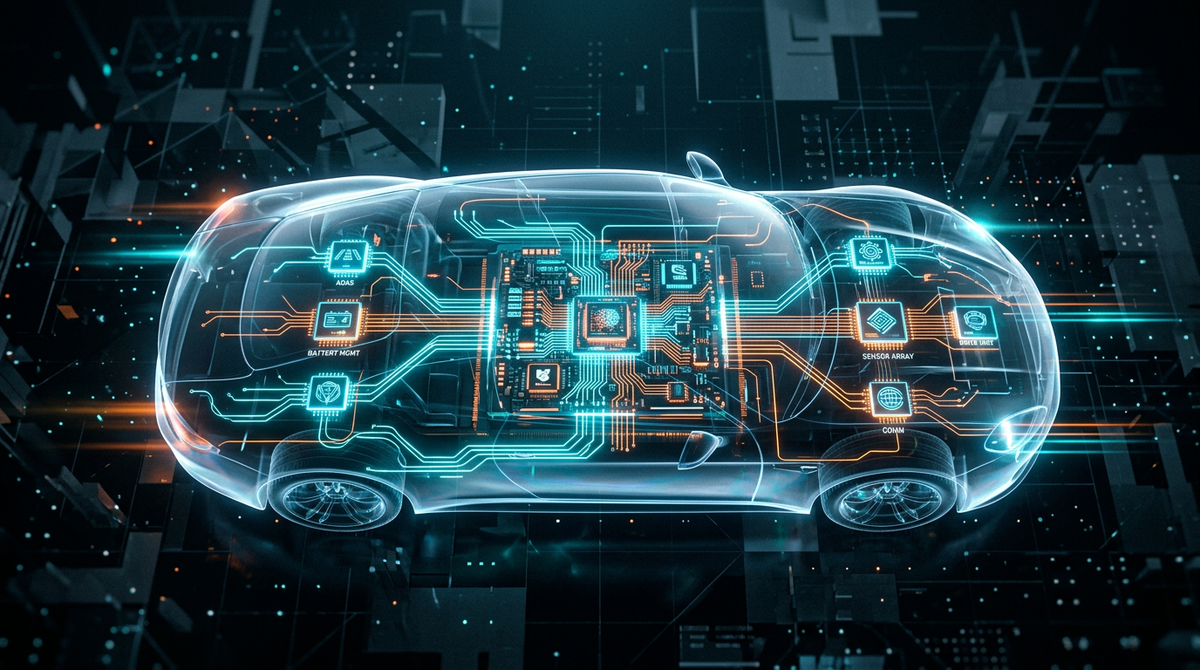
The autonomous vehicle (AV) industry is witnessing a strategic shift in how compute power is integrated into the chassis. In a rare show of alignment, semiconductor heavyweights AMD, Arm, and Qualcomm have all backed Wayve, a London-based startup specializing in 'embodied AI.' This investment is less about capital and more about ensuring that the next generation of self-driving software can run seamlessly across different silicon architectures.
Wayve distinguishes itself by using 'end-to-end' deep learning, which allows a vehicle to learn how to drive through reinforcement learning and computer vision, rather than relying on brittle, hand-coded rules or hyper-expensive HD maps. By partnering with multiple chipmakers, Wayve is effectively future-proofing its platform. It ensures that as hardware evolves—from ARM's efficiency to AMD's raw processing power—the 'brain' of the vehicle remains portable and performant.
This move highlights a growing consensus in the industry: the future of autonomy is platform-agnostic. As AV companies move away from bespoke, one-off hardware configurations toward standardized silicon, the barrier to scaling autonomous fleets drops significantly. For the semiconductor industry, this represents a massive new vertical where software demands dictate the hardware evolution path.
Source: TechCrunch