Vision Under Fire: Feds Upgrade Probe into Tesla’s FSD Performance in Low Visibility
The NHTSA has escalated its investigation into Tesla's Full Self-Driving (Supervised) software following concerns about its performance during low-visibility conditions.
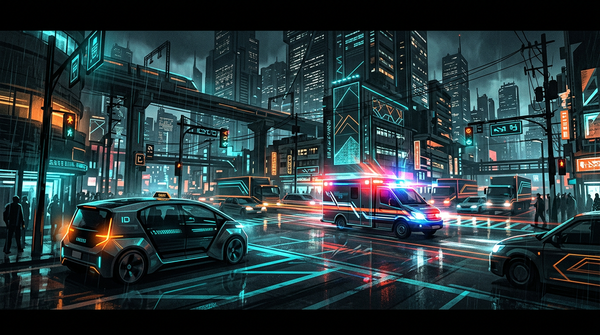
Tesla’s "Full Self-Driving" (FSD) system is under renewed scrutiny as federal regulators at the National Highway Traffic Safety Administration (NHTSA) have intensified their probe into the software's capabilities. The upgrade of the investigation follows reports of the system struggling to navigate safely in low-visibility environments, such as heavy fog, glare, or darkness. This moves the inquiry into a more serious "engineering analysis" phase, which is often a precursor to a potential recall or mandated software change.
The core of the issue lies in Tesla's "vision-only" approach to ADAS. While many competitors use a combination of LiDAR, radar, and cameras to create a redundant perception layer, Tesla relies almost exclusively on optical cameras processed by neural networks. Regulators are examining whether this hardware configuration is fundamentally capable of the "Supervised" autonomy Tesla promises, particularly when environmental factors degrade image quality. These findings are critical not just for Tesla, but for the entire ADAS industry, as they set the safety boundaries for camera-based navigation.
As Tesla continues to push its FSD software to a wider user base, the tension between rapid innovation and regulatory oversight is palpable. The NHTSA’s focus on low-visibility performance highlights a key technical hurdle: the "white-out" or "black-out" scenarios where silicon-based perception fails to match—or exceed—human judgment. The outcome of this investigation will likely influence future standards for all Level 2 and Level 2+ driver-assist systems.
Source: TechCrunch