Vision Limits: Feds Intensify Probe Into Tesla FSD Performance in Low Visibility
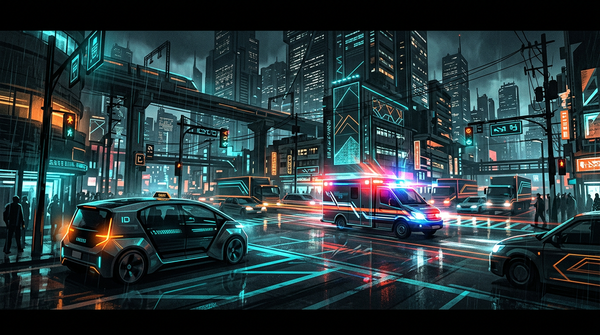
NHTSA has intensified its investigation into Tesla's Full Self-Driving (Supervised) software following new incidents in low-visibility conditions. The probe focuses on the system's ability to handle fog, glare, and heavy rain without human intervention.
The federal government is tightening its grip on Tesla’s "Full Self-Driving (Supervised)" software. The National Highway Traffic Safety Administration (NHTSA) recently upgraded its investigation from a preliminary evaluation to an engineering analysis—the final step before a potential recall—after identifying repeated failures in low-visibility conditions. The core of the probe involves Tesla's "Vision-only" approach, which relies exclusively on cameras rather than a fusion of LIDAR and radar.
Federal investigators are specifically looking at how the software handles environmental "edge cases" such as heavy fog, solar glare, and torrential rain. In several documented instances, the system reportedly struggled to identify obstacles or maintain lane positioning when visibility was compromised. This highlights a critical tension in the ADAS world: the "Tesla way" of mimicking human vision-only perception versus the "redundancy-first" approach favored by most other Tier 1 suppliers and OEMs.
For engineers, this investigation serves as a case study in the limitations of current neural networks. While Tesla’s end-to-end AI training has made remarkable strides in "average" driving conditions, the lack of diverse sensing modalities remains a point of contention. If the NHTSA determines that cameras alone are insufficient for safe operation in all weather conditions, it could force a radical redesign of Tesla’s sensor suite or a severe restriction on where and when the software can be engaged. For the ADAS industry, the verdict of this investigation will set the standard for what constitutes "reasonable safety" in Level 2+ semi-autonomous systems.
Source: TechCrunch