U.S. Navy Inks Massive Predictive Maintenance Deal with Gecko Robotics
In a landmark deal, Gecko Robotics has secured a five-year contract with the U.S. Navy to deploy maintenance-monitoring robots across the fleet. This move signals a shift toward "predictive maintenance," where robots identify structural weaknesses before they lead to catastrophic failure.
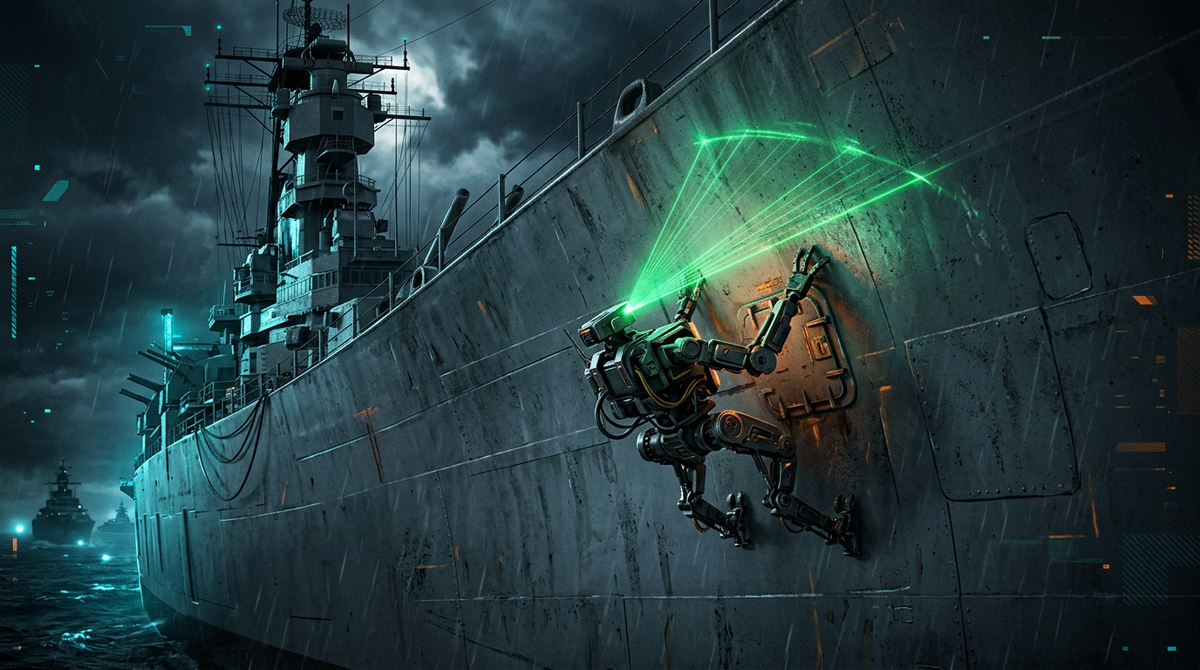
The U.S. Navy is turning to robotics to solve one of its oldest and most expensive problems: rust and structural decay. Gecko Robotics has been awarded its largest contract to date to deploy wall-climbing robots tasked with inspecting the hulls and internal structures of Navy ships. Using advanced sensors and "digital twin" technology, these robots provide a level of detail that human inspectors simply cannot match.
Traditional ship maintenance is reactive, often occurring only when a problem becomes visible or during mandatory dry-docking periods. Gecko’s robots allow for a "predictive" approach. By crawling across surfaces and using ultrasonic transducers to measure metal thickness, the robots can identify hotspots for corrosion months or even years before a breach occurs. This data is then used to create a comprehensive digital map of the ship's health, allowing commanders to prioritize repairs and extend the life of the fleet.
This contract is a major win for the "service robot" sector. While humanoid robots like those from Figure and 1X capture headlines, specialized robots like Gecko’s are proving their value in the "dirty, dull, and dangerous" tasks that define naval logistics. As the Navy looks to maintain a global presence with an aging fleet, the ability to automate the inspection process is no longer a luxury—it is a strategic necessity.
Source: TechCrunch