The World Doesn’t Need Better Maps. It Needs Better Memories
Neural Reconstruction, Spatial Persistence, and Why the Real Breakthrough in Physical AI Isn’t Where You Think
There is a quiet revolution happening in how machines perceive the physical world, and most of the industry is looking at it through the wrong lens.
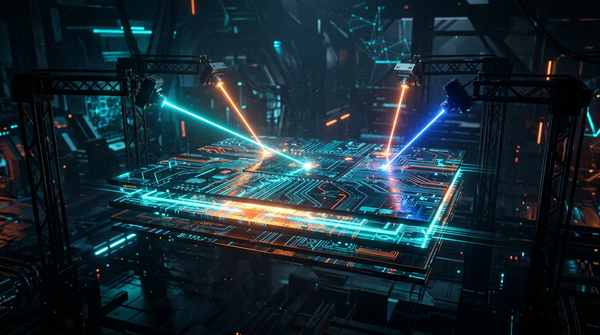
Neural reconstruction — the family of techniques that includes Neural Radiance Fields, 3D Gaussian Splatting, and their rapidly evolving successors — is being positioned primarily as a simulation technology. Capture a real-world scene with cameras and LiDAR, run it through a neural pipeline, produce a photorealistic digital twin for testing autonomous vehicles in software. NVIDIA’s Omniverse NuRec exemplifies this approach: ingesting multi-camera sensor data, generating 3D Gaussian representations, and integrating with simulators like CARLA to create high-fidelity synthetic training environments. It is impressive engineering. The dataset already contains over 900 reconstructed driving scenes. Partners like Foretellix and Voxel51 are building toolchains around it for scenario variation and safety validation.
But here is my contention: if we treat neural reconstruction merely as a better way to build simulation environments, we are solving yesterday’s problem with tomorrow’s technology.
The Real Opportunity: From Reconstruction to Persistent World Understanding
In my previous article on OpenClaw and spatial persistent memory, I argued that the fundamental gap in Physical AI is not perception but retention — the ability of machines to maintain a queryable, semantic, temporal model of the world they have experienced. Traditional robots perceive the present with extraordinary fidelity and then discard everything they have perceived. The SLAM stack answers “where am I?” but not “what has happened here?”
Neural reconstruction changes this equation, but not in the way the mainstream narrative suggests. The real power of techniques like 3D Gaussian Splatting is not that they produce prettier simulations. It is that they create dense, continuous, semantically rich representations of physical space that can persist, be queried, be updated, and be reasoned over. When you reconstruct a scene as a field of Gaussians tagged with appearance, geometry, and learned features, you have not just built a visual replica. You have encoded a spatial data structure that an AI system can interrogate.
Consider the implications. An autonomous vehicle that continuously reconstructs its environment using neural methods is not just mapping its surroundings for immediate navigation. It is building a living, evolving 3D memory of every road, intersection, parking structure, and pedestrian pattern it has ever encountered. Merge this with the voxel-based spatial memory systems emerging from frameworks like OpenClaw — where each spatial unit is tagged with semantic labels and temporal indices — and you arrive at something fundamentally new: a vehicle that doesn’t just see the road but remembers it.
The Startup Landscape: World Labs and the Spatial Intelligence Thesis
Fei-Fei Li understood this before most of the industry. Her startup World Labs, which raised $1 billion in February 2026 from investors including NVIDIA, AMD, and Autodesk, is not building another generative AI company. It is building what Li calls “spatial intelligence” — AI systems that can perceive, generate, and reason about three-dimensional environments. The company’s Marble model creates persistent, editable 3D worlds from multimodal inputs: text, images, video, or coarse 3D layouts.
What distinguishes World Labs from the neural reconstruction tools coming out of NVIDIA and the autonomous driving ecosystem is the ambition of the representation. NuRec reconstructs what cameras have seen. Marble generates what could exist — and critically, maintains persistence and editability within those generated worlds. Li’s framing is precise: “We are moving from AI that can describe a cup to AI that understands the cup has volume, sits on a table, can be grasped, and exists in a 3D space relative to other objects.”
This is not a creative tool story, even though the early use cases are in entertainment and design. The trajectory points directly at robotics and autonomous systems. A robot operating with a World Labs-style spatial model doesn’t just navigate a kitchen — it understands the geometry, the physics, the semantic relationships between every object in that space. When Li says “the world is 3D” as her core thesis, she is making an architectural argument that the entire AI stack needs to be rebuilt around volumetric, persistent representations rather than flat tokens.
The Hard Problems: Why This Is Still Early
I would be dishonest if I didn’t surface the engineering challenges that remain substantial. Neural reconstruction at scale is computationally voracious. Even with NVIDIA’s NuRec Fixer — a diffusion-based model built on Cosmos that cleans up reconstruction artifacts like blurriness, holes, and spurious geometry — the pipeline from raw sensor data to usable 3D representation remains expensive and fragile. Novel viewpoints still produce artifacts. Dynamic scenes with fast-moving objects degrade reconstruction quality. And the storage and compute requirements for maintaining persistent neural world models across an entire operational domain are orders of magnitude beyond what current edge hardware can support.
There is also a data problem. Language models train on the internet. Neural reconstruction models train on sensor captures that are expensive, geographically constrained, and privacy-sensitive. High-quality annotated 3D spatial datasets remain scarce. This is precisely why NVIDIA has invested so heavily in its Physical AI dataset and why World Labs’ $1 billion raise is as much about data infrastructure as it is about model research.
And then there are the questions I raised in my previous article about robots that remember everything: privacy, surveillance, consent. A vehicle that maintains a persistent neural reconstruction of every street it has driven — including the people, the buildings, the patterns of life — creates a surveillance infrastructure that no regulatory framework is currently equipped to govern.
The Contrarian View: Stop Reconstructing. Start Forgetting.
Now, here is where I want to offer a perspective that runs counter to the prevailing narrative.
The entire neural reconstruction ecosystem — from NVIDIA’s NuRec to World Labs’ Marble to the spatial memory frameworks I have previously championed — operates on an implicit assumption: more memory is better. Richer reconstruction is better. More persistent, more detailed, more comprehensive world models will produce more capable machines.
I am beginning to question that assumption.
Biological intelligence does not work this way. Human spatial memory is radically lossy. We do not maintain a photorealistic Gaussian splat of every room we have ever entered. We retain abstract schemas — the general layout, the relative positions of important objects, the emotional valence of the space. We forget aggressively, and that forgetting is not a bug. It is the mechanism that enables generalisation. A child who has been in a hundred kitchens can navigate a novel kitchen precisely because they have not memorised the exact geometry of any particular one. They have abstracted the concept of “kitchen” into a flexible spatial schema.
What if the frontier of Physical AI is not building machines that remember everything, but building machines that learn to forget strategically?
Consider what this would mean architecturally. Instead of maintaining ever-growing neural reconstructions of the physical world, an AI system would continuously reconstruct, extract abstract spatial schemas, and then discard the raw representation. The persistent memory would not be a dense 3D model but a sparse, semantic graph of spatial relationships, affordances, and causal patterns — exactly the kind of structure that transfers across environments and scales to new situations.
This is not how anyone in the industry is building today. NVIDIA is building denser reconstructions. World Labs is building richer world models. The entire trajectory is toward more fidelity, more persistence, more detail. But the most capable spatial reasoners in the known universe — human beings — operate on a radically different principle: selective compression and strategic amnesia.
The Synthesis: Reconstruct Everything, Remember Almost Nothing
My proposition is this: neural reconstruction and spatial persistent memory are not the end state. They are the perceptual pipeline — the raw material from which a higher-order spatial intelligence extracts, compresses, and curates what matters. The breakthrough will not come from the team that builds the most photorealistic 3D world. It will come from the team that builds the system which knows what to keep and what to throw away.
NuRec gives us the reconstruction. OpenClaw-style frameworks give us the spatial memory. World Labs gives us the generative world model. But the missing layer — the layer nobody is building yet — is the forgetting layer. The system that watches a vehicle drive ten thousand kilometres, reconstructs every metre in neural 3D, extracts the abstract spatial intelligence from that experience, and then has the architectural discipline to discard the rest.
That is not a simulation problem. It is not a reconstruction problem. It is a cognition problem. And it is, I believe, the most important unsolved problem in Physical AI today.
The world doesn’t need better maps. It needs machines that know what’s worth remembering.