The Safety Validation: VW’s ID. Buzz ADAS Hardens for the Streets of LA
Volkswagen's MOIA America has begun testing its ID. Buzz ADAS-equipped microbuses in Los Angeles. The testing phase is a critical step in refining sensor fusion and camera-based safety systems before a planned commercial launch.
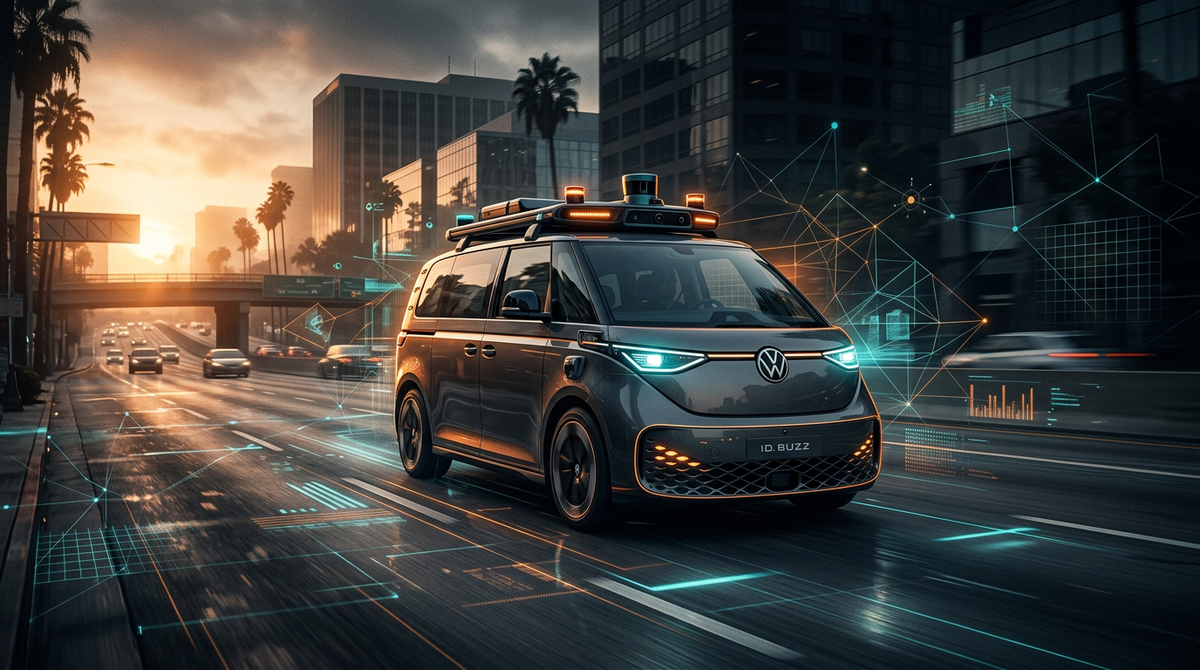
Volkswagen is taking a localized approach to the deployment of its advanced driver assistance systems (ADAS), beginning rigorous real-world testing of its ID. Buzz microbuses in the complex traffic environment of Los Angeles. Under its subsidiary MOIA America, the German automaker is focusing on the "last mile" of safety validation—ensuring that its suite of sensors can handle the high-glare, high-density, and often unpredictable nature of Southern Californian roads.
The ID. Buzz platform represents the pinnacle of VW’s current ADAS capabilities, utilizing a combination of LIDAR, radar, and high-resolution cameras to provide 360-degree situational awareness. Unlike fully autonomous systems that aim to remove the driver entirely from day one, VW’s testing phase is heavily focused on the handover between machine and human, as well as the reliability of Level 3 autonomy in stop-and-go highway traffic. This "safety-first" philosophy is partly a response to increased regulatory scrutiny and a desire to build public trust after recent high-profile incidents in the AV sector.
The choice of Los Angeles as a testing ground is tactical. The city’s infamous congestion and varied neighborhood structures provide the perfect stress test for the vehicle’s predictive algorithms. If the ID. Buzz can successfully navigate the 405 freeway and the narrow streets of Silver Lake, it proves the robustness of the underlying ADAS architecture. For Volkswagen, this is more than just a tech demo; it is a prerequisite for their upcoming partnership with Uber, which aims to integrate these microbuses into a commercial ride-pool network by 2027.
Source: TechCrunch