The Rise of the Electronic Digital Twin in Software-Defined Vehicles
The industry is shifting from physical vehicle simulation to electronic digital twins, enabling manufacturers to test complex software stacks against virtual hardware.
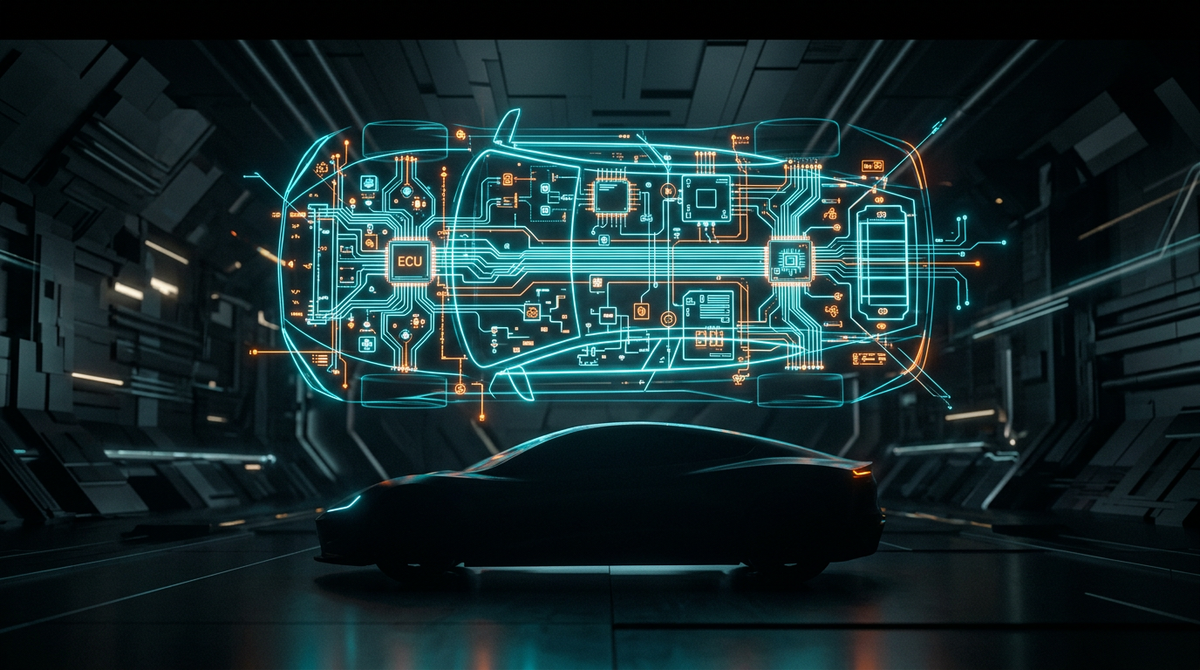
In the era of the Software-Defined Vehicle (SDV), simulating the aerodynamics or the crash-worthiness of a car is no longer enough. Modern vehicles are essentially data centers on wheels, and the industry is now pivoting toward "Electronics Digital Twins." These high-fidelity virtual replicas of a vehicle’s silicon and electrical architecture allow engineers to develop and test software before a single physical chip is produced.
As vehicles incorporate millions of lines of code to manage everything from powertrain efficiency to infotainment, the risk of software-hardware incompatibility grows. Digital twins allow for "shift-left" development, where software teams can simulate how an OTA (Over-the-Air) update will interact with specific semiconductor configurations. This reduces the need for expensive physical prototypes and accelerates the development cycle for new features.
However, building these twins is difficult. It requires cooperation between Tier 1 suppliers, semiconductor foundries, and automakers to share proprietary hardware specifications. Despite these hurdles, the adoption of electronic digital twins is becoming an existential necessity for OEMs looking to compete in the fast-paced SDV market.
Source: Semiconductor Engineering