Silicon Giants Join Forces in Strategic Bet on Wayve’s Autonomous Tech
Wayve's latest funding round features heavyweights AMD, Arm, and Qualcomm, highlighting a strategic shift toward hardware-agnostic self-driving platforms. The move emphasizes the need for varied compute architectures to handle the massive data requirements of Level 4 autonomy.
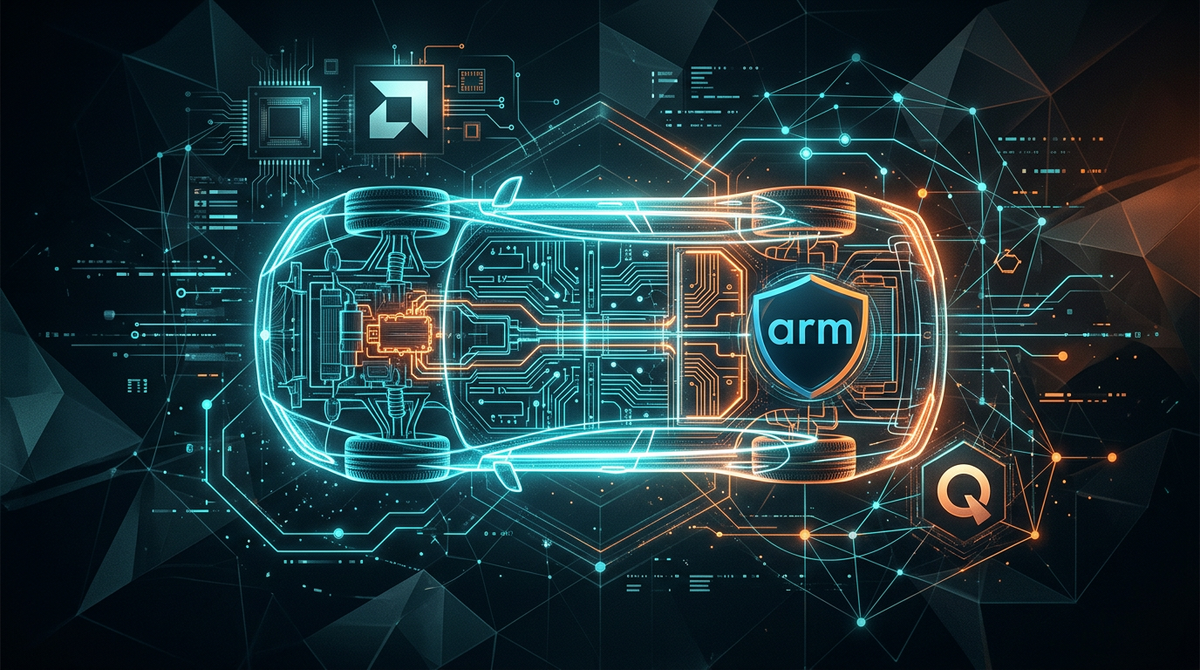
The autonomous vehicle sector is witnessing a consolidation not of companies, but of strategic interests. In a rare alignment, semiconductor giants AMD, Arm, and Qualcomm have all invested in the London-based self-driving startup Wayve. This collective backing signals a pivot in the industry: the future of self-driving is no longer just about the car, but about the silicon and the "embodied AI" that can run across diverse hardware platforms.
Wayve has distinguished itself by focusing on end-to-end deep learning, moving away from the brittle, rules-based systems of earlier AV iterations. Because Wayve’s "AV2.0" approach relies heavily on large-scale neural networks, it requires immense and varied compute capabilities. The involvement of Arm and Qualcomm suggests a focus on energy-efficient edge processing in the vehicle, while AMD’s presence points toward the high-performance computing needed for cloud-based training and simulation.
This "hardware-agnostic" trajectory is crucial for the scaling of autonomous fleets. By ensuring their software can run seamlessly across different chip architectures, Wayve is shielding itself from supply chain shocks and positioning its technology to be integrated into everything from delivery vans to long-haul trucks. For the chipmakers, the investment is a front-row seat to the most demanding edge-computing application in history, allowing them to refine their future silicon for the specific needs of autonomous mobility.
Source: TechCrunch