Physical AI: When Robots Start to Reason Like Humans
The fusion of LLMs with physical robotics is reaching a tipping point. New research from Boston Dynamics and Google DeepMind demonstrates how robots like Spot can now use reasoning to interpret complex human instructions and execute tasks in dynamic environments.
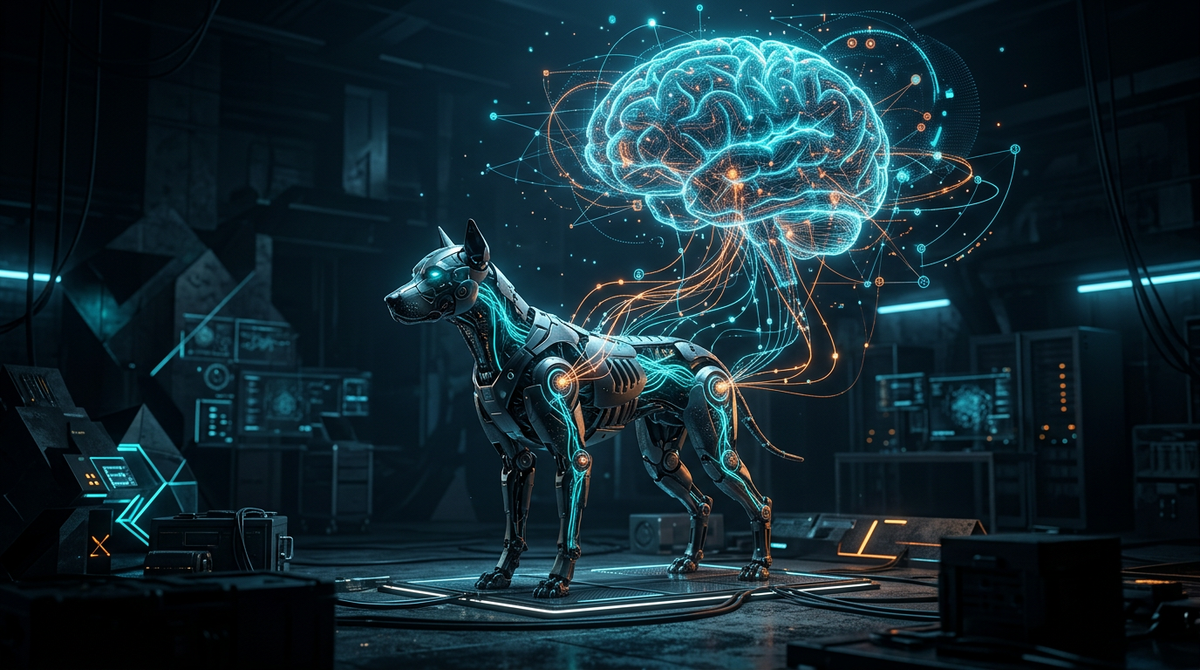
For decades, the "robotics gap" was defined by a machine's inability to understand context. You could program a robot to move a box from point A to point B, but asking it to "find the mess in the kitchen and clear it" required a level of semantic reasoning that simply didn't exist in silicon. That is changing rapidly as Physical AI—the embodiment of generative models into mechanical systems—moves from the lab to the field.
Recent collaborations between Boston Dynamics and Google DeepMind have equipped the iconic Spot quadruped with the ability to "reason" through its environment. By integrating Large Language Models (LLMs) with visual-tactile sensors, these machines can now translate vague natural language commands into a series of actionable physical steps. This isn't just about better voice recognition; it is about the robot building a mental model of the world, identifying objects it hasn't seen before, and deciding on the fly how to interact with them.
NVIDIA’s latest research highlights during National Robotics Week further underscore this shift. We are seeing a transition from "scripted" robotics to "agentic" robotics. In these systems, the AI isn't just a brain in a jar; it is a controller that understands the physics of the body it inhabits. This evolution is crucial for industries like agriculture and healthcare, where the environment is too unpredictable for traditional coding. As Physical AI matures, the distinction between "software" and "machine" is effectively disappearing, creating a new class of intelligent entities capable of true autonomy.
Source: IEEE Spectrum