NVIDIA Nemotron 3 Nano Omni Unifies the Senses for Physical AI Agents
NVIDIA's new Nemotron 3 Nano Omni model marks a shift toward unified multimodal AI, allowing agents to process vision, audio, and language in a single pass. This architecture eliminates the latency and context loss common in traditional modular systems.
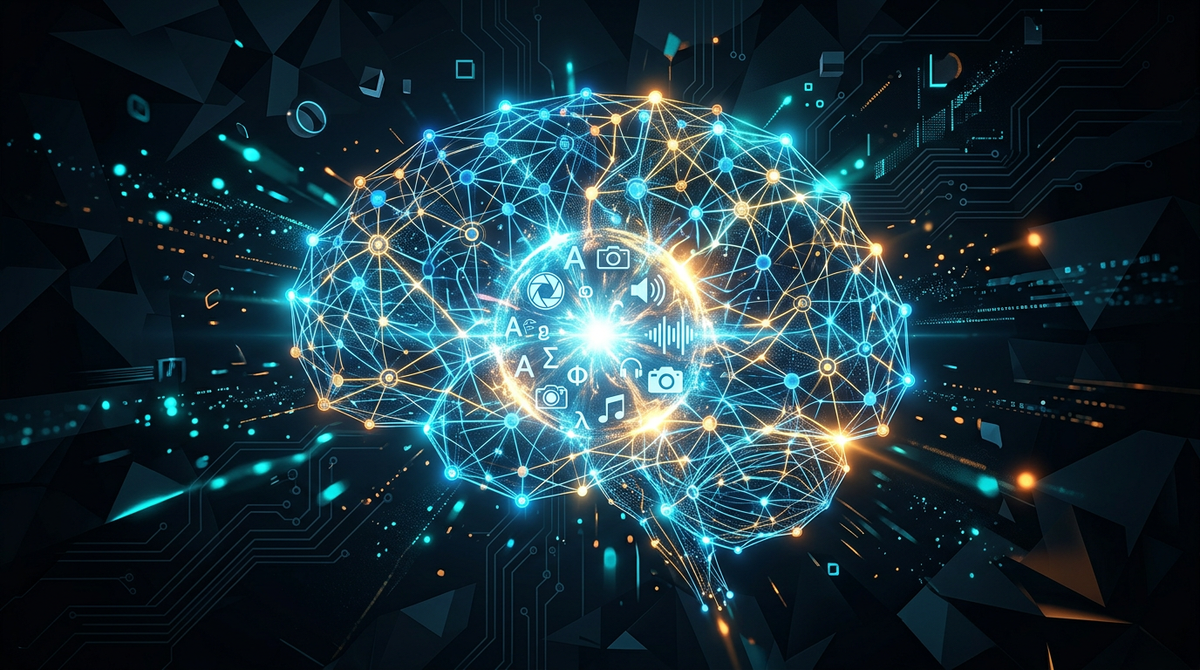
For years, the development of Physical AI has been hampered by a "bottleneck of handoffs." To understand its environment, an AI agent typically had to pass data through separate models for vision, speech recognition, and natural language processing. Each handoff introduced fractional delays and, more critically, a loss of nuanced context. Today, NVIDIA announced a significant leap over this hurdle with the Nemotron 3 Nano Omni model.
The Nano Omni is a unified, multimodal model designed to process vision, audio, and language simultaneously. By consolidating these senses into a single neural architecture, NVIDIA claims up to 9x greater efficiency for AI agents. In practical terms, this means a robotic assistant or an industrial sensor could "see" a collision occurring and "hear" the mechanical failure at the exact same moment, processing the combined data stream with the same immediacy as a human operator.
This efficiency gain is particularly vital for edge computing, where power and compute resources are finite. By reducing the overhead of running multiple discrete models, the Nano Omni enables more sophisticated reasoning in smaller, battery-operated devices. As the industry moves toward "true" Physical AI—systems that can interact with the chaotic real world in real-time—unified models like the Nemotron 3 Nano Omni represent the foundational infrastructure for the next generation of autonomous machines.
Source: NVIDIA News