Gecko Robotics Secures Landmark Navy Deal for Autonomous Fleet Inspection
Gecko Robotics has secured its largest U.S. Navy contract to date, deploying autonomous climbing robots to perform hull inspections. This deal underscores the growing reliance on specialized robotics to ensure fleet readiness and predictive maintenance.
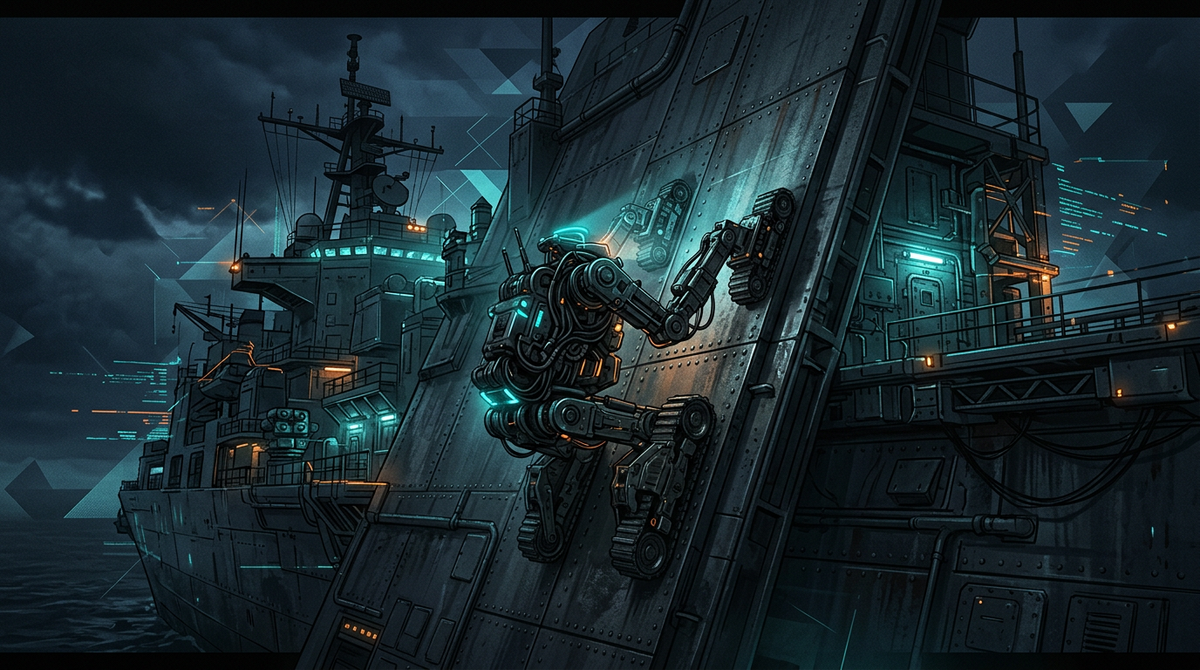
In a major win for the industrial robotics sector, Gecko Robotics has inked a five-year deal with the U.S. Navy to revolutionize ship maintenance. The agreement focuses on the deployment of Gecko’s "TOKA" series robots—climbing machines equipped with ultrasonic transducers that can "crawl" up the sides of massive naval vessels. These robots are designed to detect corrosion, wall thinning, and structural vulnerabilities that are often invisible to the human eye.
The traditional method of ship inspection involves dry-docking and manual labor, a process that is both time-consuming and prone to human error. By contrast, Gecko’s autonomous systems provide high-density data maps of the entire hull, allowing for a "digital twin" approach to maintenance. This data enables the Navy to move from reactive repairs to predictive maintenance, identifying where a hull might fail months before it actually happens. This is critical for maintaining the operational tempo of a modern blue-water navy.
This contract highlights a shift in the robotics market from general-purpose humanoids to task-specific platforms. While companies like Boston Dynamics and Tesla focus on versatile mobility, Gecko has dominated the inspection niche by mastering the physics of wall-climbing and high-precision sensing in harsh environments. As the U.S. military looks to modernize its aging infrastructure, autonomous inspection robots will become an indispensable tool in the logistics and readiness arsenal.
Source: TechCrunch