ETH Zurich Develops 'Walking' Robotic Hand for Modular Agility
Researchers at ETH Zurich have developed a 'walking' robotic hand that operates independently of an arm. This modular approach to robotics challenges traditional humanoid designs and opens new doors for versatile manipulation.
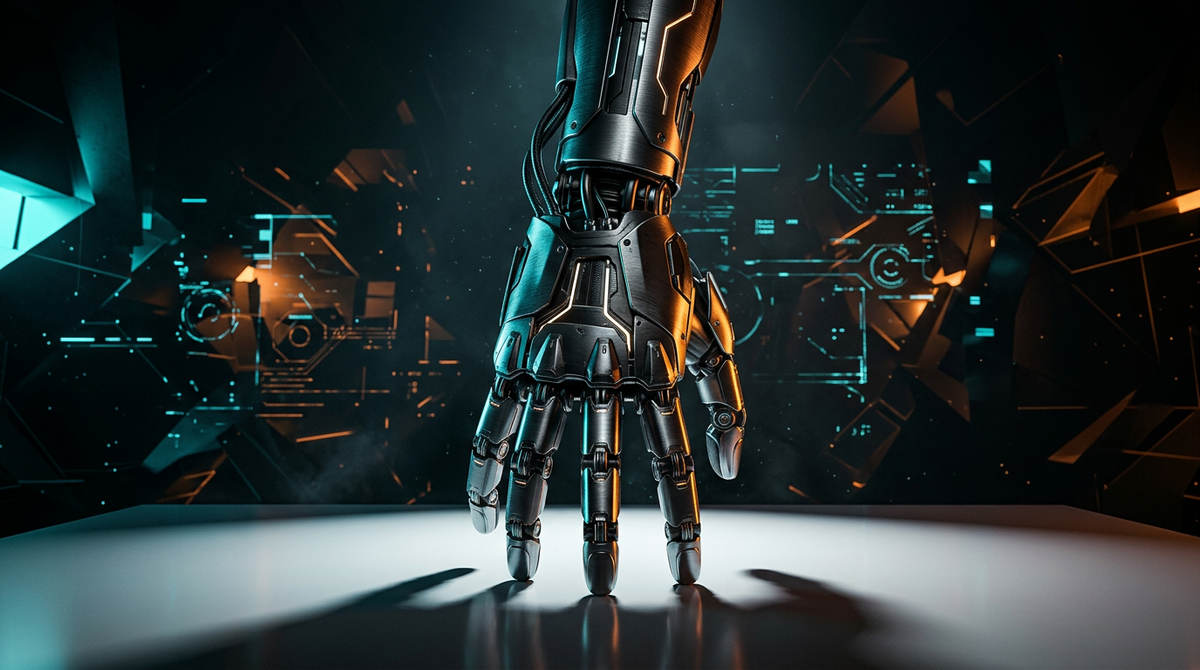
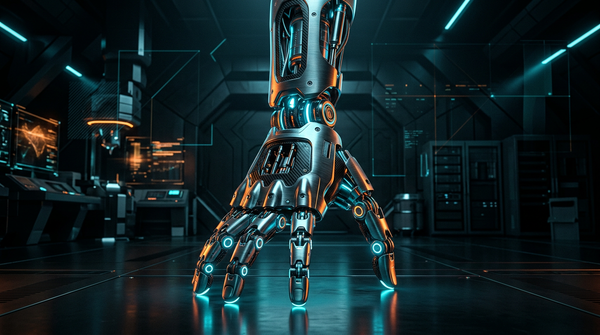
In a departure from traditional humanoid form factors, researchers at ETH Zurich have unveiled a disembodied robotic hand that can "walk" on its fingers. By repurposing an off-the-shelf robotic hand and equipping it with advanced control algorithms, the team has demonstrated that a hand doesn’t necessarily need an arm to be a functional, mobile robot. This breakthrough suggests a new paradigm for modular robotics where specialized components can move independently to reach confined spaces.
The "walking hand" uses its digits to navigate surfaces, climb over obstacles, and then transition seamlessly into manipulation mode to pick up and move objects. This dual-purpose capability is powered by a sophisticated gait engine that coordinates the hand's high-degree-of-freedom structure. Such technology could be revolutionary for search-and-rescue missions in collapsed structures or for maintenance tasks inside complex machinery where a full-sized robotic arm would be too bulky to enter.
This development coincides with the release of the HiPHI benchmark, a large-scale dataset aimed at improving high-precision human motion and object interaction. By combining better data with radical new hardware designs like the walking hand, the field of robotics is moving toward systems that are more adaptable and less constrained by biological mimicry. The success of this experiment highlights the potential for "distributed robotics," where multiple small, specialized units cooperate to complete complex tasks.
Source: IEEE Spectrum