Red-Teaming ADAS: How Laplace Intelligence Stress-Tests Autonomy
Laplace Intelligence is utilizing AI agents and interactive simulations to red-team ADAS and autonomous systems. By stress-testing software before real-world deployment, the startup aims to prevent catastrophic edge-case failures.
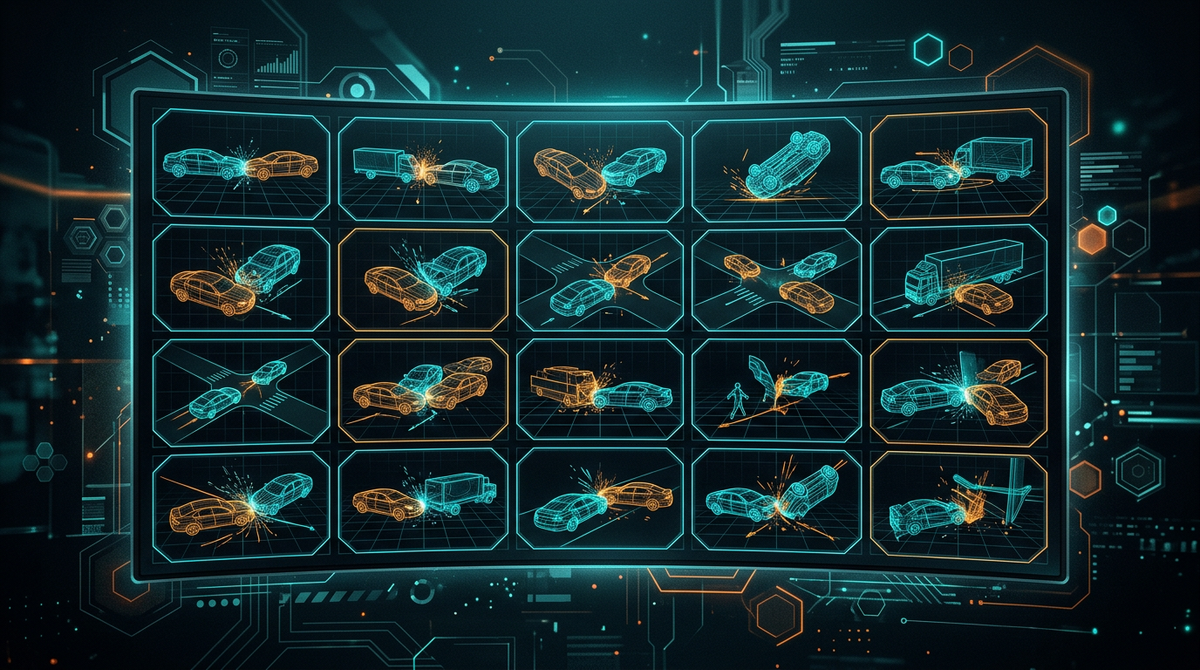
Safety in Advanced Driver Assistance Systems (ADAS) is often measured by how well a system handles the "normal" drive, but the real challenge lies in the outliers. Laplace Intelligence, a spinout from the University of Michigan, is tackling this by "red-teaming" robots and self-driving cars. Using AI agents that act as aggressive or unpredictable actors within a virtual simulation, Laplace subjects ADAS software to thousands of high-stress scenarios that would be too dangerous or expensive to replicate on public roads.
This methodology is a significant departure from traditional testing, which often relies on passive data collection. By actively trying to "break" the system, Laplace helps engineers identify vulnerabilities in perception and decision-making logic. For instance, how does an ADAS system respond when a pedestrian suddenly darts from behind a truck while a cyclist is swerving into the lane? These interactive simulations provide a feedback loop that hardens the software against rare but lethal edge cases.
As regulatory scrutiny on ADAS increases—exemplified by new laws regarding autonomous vehicle behavior—the ability to prove rigorous pre-deployment testing is becoming a business necessity. Laplace’s approach ensures that when a vehicle eventually hits the pavement, its software has already "survived" the worst-case scenarios the digital world can throw at it.
Source: TechCrunch