Beyond the Arm: The Rise of the Autonomous Walking Robotic Hand
Researchers at ETH Zurich have developed a 'walking' robotic hand that can move independently without an attached arm. This breakthrough challenges traditional humanoid design, offering new possibilities for versatile robotic manipulation.
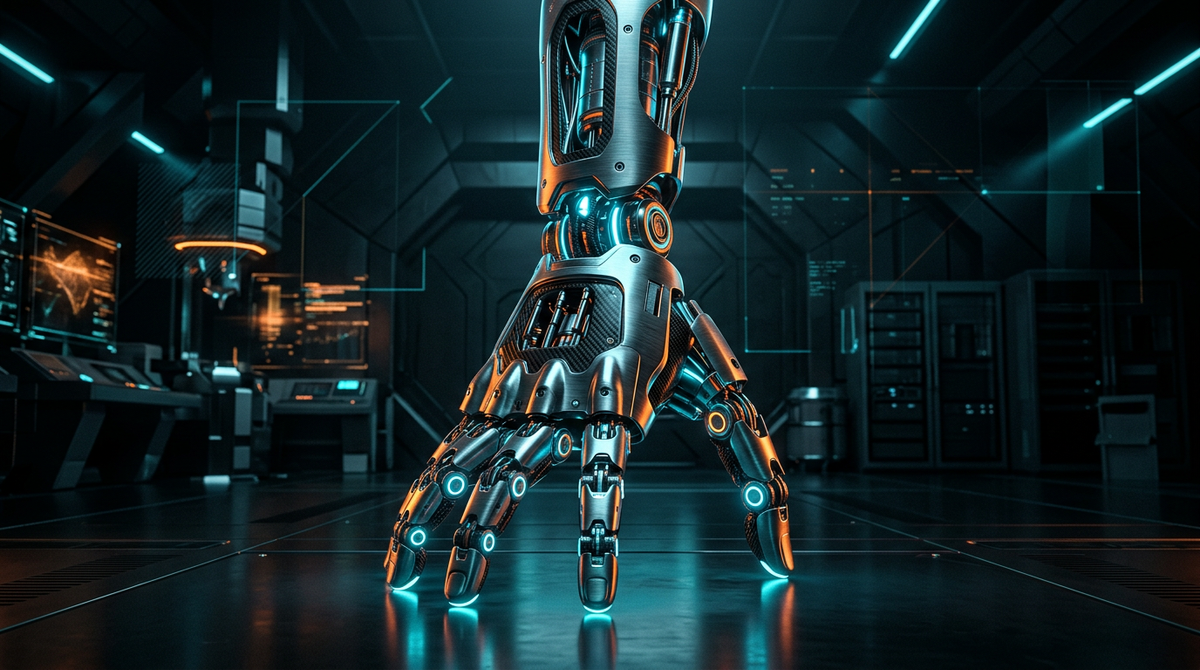
For decades, the robotic hand has been viewed merely as an end-effector—a tool at the end of a mechanical arm. Researchers at ETH Zurich are flipping this paradigm by developing a disembodied robotic hand that can walk, flip, and manipulate objects entirely on its own. By repurposing the fingers as legs, the team has created a highly mobile and compact robotic platform capable of navigating environments that would be inaccessible to larger, arm-based systems.
This "walking hand" utilizes sophisticated tactile sensors and coordination algorithms to balance and move across uneven surfaces. While it may look unconventional, the engineering implications are profound. In tight spaces like crawlspaces, pipes, or complex machinery, a small, independent manipulator can perform tasks—such as turning a valve or retrieving a component—that a traditional robot could not reach. It represents a shift toward modular robotics, where the hand is no longer a dependent peripheral but a self-contained agent.
The project also highlights the importance of high-precision datasets in robotics. Developments like the HiPHI benchmark are crucial for training these types of systems, providing the high-fidelity motion data required for fine-motor control and complex interaction. As robotics moves away from mimicking human form and toward task-optimized shapes, the "walking hand" serves as a proof of concept for a more flexible, decentralized future in automation.
Source: IEEE Spectrum