Directed Energy: US Joint Laser System Targets Cruise Missile Interception
The U.S. Navy and Army are collaborating on a new 150-kilowatt containerized laser weapon system designed to intercept cruise missiles. This joint effort highlights a shift toward high-energy directed weapons for defensive ship and terrestrial protection.
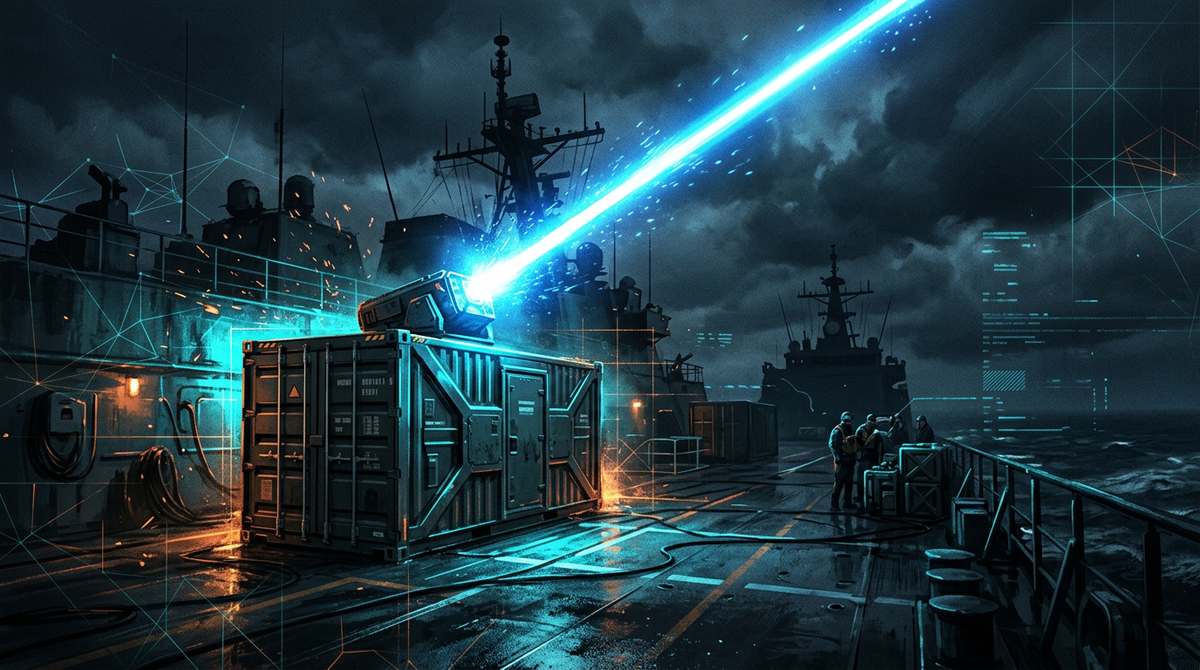
The era of directed-energy warfare is moving from experimental prototypes to deployable systems. The U.S. military has unveiled details regarding a new joint laser weapon system developed through a partnership between the Army and the Navy. This 150-kilowatt high-energy laser (HEL) is designed as a containerized solution, allowing it to be easily integrated into various platforms, from naval vessels to ground-based tactical units.
The primary mission of the system is the interception of incoming cruise missiles and Unmanned Aerial Systems (UAS). Unlike traditional kinetic interceptors, which are expensive and finite, laser weapons offer a "deep magazine" with a significantly lower cost-per-shot. As long as the platform can provide the necessary electrical power, the laser can continue to engage threats. This is particularly relevant for the Navy’s aircraft carriers, which possess the massive power output required to run high-energy lasers without compromising other ship functions.
This joint effort signals a standardized approach to laser technology across the services. By developing a modular, containerized system, the military can accelerate testing and deployment cycles. While challenges remain—such as atmospheric interference and the immense cooling requirements for sustained firing—the 150-kilowatt threshold marks a significant milestone in making laser-based defense a staple of modern warfare in contested environments.
Source: C4ISRNet