Cybertruck Becomes a Grid-Scale Asset via V2X Software
The Tesla Cybertruck has been approved as California’s first AC vehicle-to-grid (V2G) asset, allowing the vehicle to function as a mobile battery for the state's electrical infrastructure. This represents a major milestone for Software-Defined Vehicles in the energy sector.
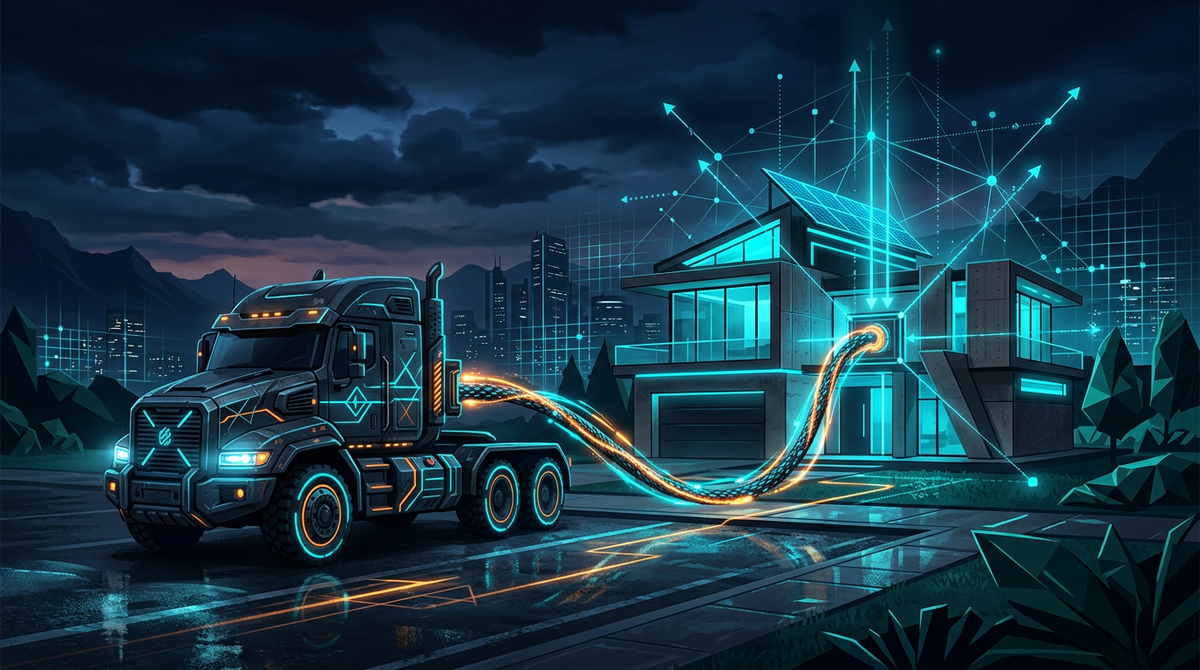
Software-Defined Vehicles (SDVs) are often discussed in terms of infotainment or driving features, but a new partnership between Tesla and PG&E proves that the most valuable 'software' feature might be energy management. The Cybertruck has officially been integrated into California's residential Vehicle-to-Everything (V2X) pilot program, making it the first AC vehicle capable of selling power back to the grid.
This capability is a masterclass in SDV utility. Through over-the-air (OTA) updates and sophisticated power-electronics management, the Cybertruck can detect when grid demand is high and prices are peaked, then discharge its massive battery to support the home or the wider community. This effectively turns a fleet of vehicles into a virtual power plant (VPP).
For owners, this transforms the vehicle from a depreciating asset into a potential revenue stream or, at the very least, a hedge against rising electricity costs. For utilities, the ability to tap into gigawatts of distributed storage via software commands allows for a more resilient grid without the need to build expensive, stationary "big batteries." As more manufacturers adopt the SDV model, the line between transport and infrastructure will continue to blur, driven by the code that manages the flow of electrons.
Source: Electrek