Why Gaming Data is the Secret Key to Unlocking Physical AGI
The quest for Artificial General Intelligence is shifting away from text-based models toward video game environments. Startups are leveraging gaming data to teach AI agents how to interact with complex, physics-based worlds, providing a bridge to physical reality.
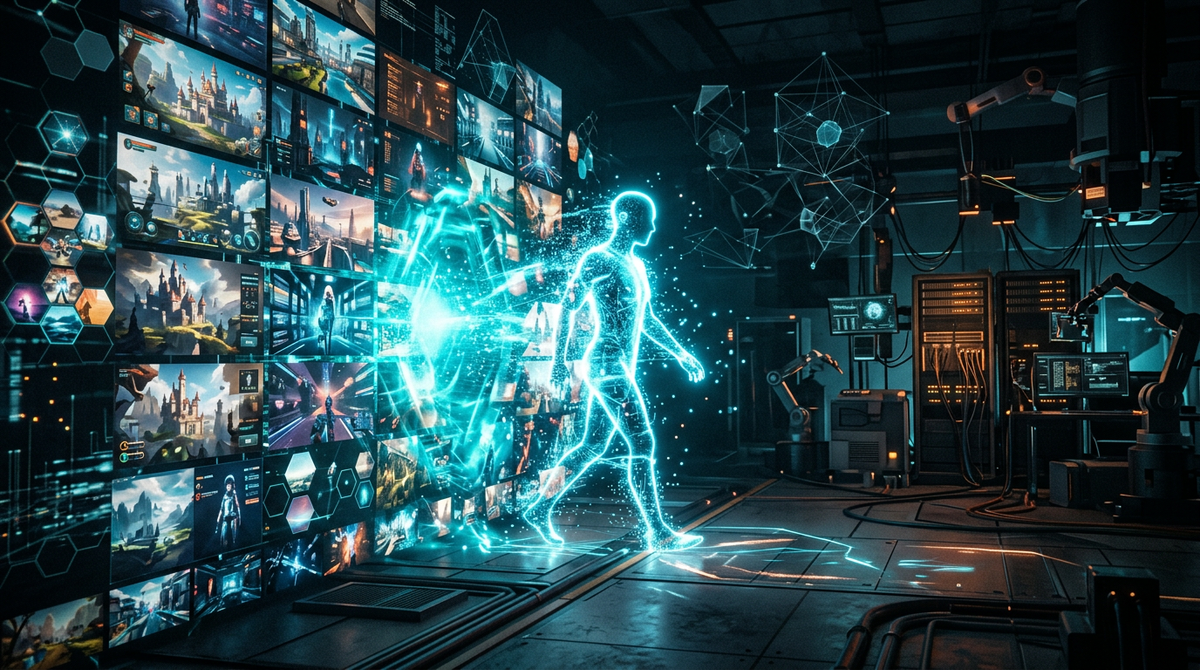
For years, the path to Artificial General Intelligence (AGI) was thought to be paved with text. However, a growing consensus among AI researchers and Silicon Valley startups suggests that Large Language Models (LLMs) like ChatGPT have hit a ceiling in their understanding of the physical world. The new frontier for Physical AI isn't the library, but the video game engine.
Startups, including those backed by Jeff Bezos, are now utilizing high-fidelity gaming environments to generate the massive amounts of training data needed for AI to understand "space and time." Unlike static text, video games provide a closed-loop system where actions have immediate physical consequences. An AI learning in a game environment understands that a door must be opened before walking through it, a concept LLMs only understand as a sequence of words.
This approach addresses the "data scarcity" problem in robotics. By simulating billions of interactions in virtual worlds—ranging from basic movement to complex object manipulation—developers can create "foundation models for movement." These models can then be transferred to physical robots, allowing them to navigate the real world with a level of intuition previously reserved for biological entities. As we move closer to AGI, the line between digital simulation and physical execution continues to blur, making gaming data the unexpected "secret sauce" for the next generation of autonomous systems.
Source: TechCrunch