Why Gaming Data is the Key to the Software-Defined Vehicle
The transition to software-defined mobility is facing a critical challenge: training models on high-quality spatial data. Founders are now turning to video game engines to bridge the gap.
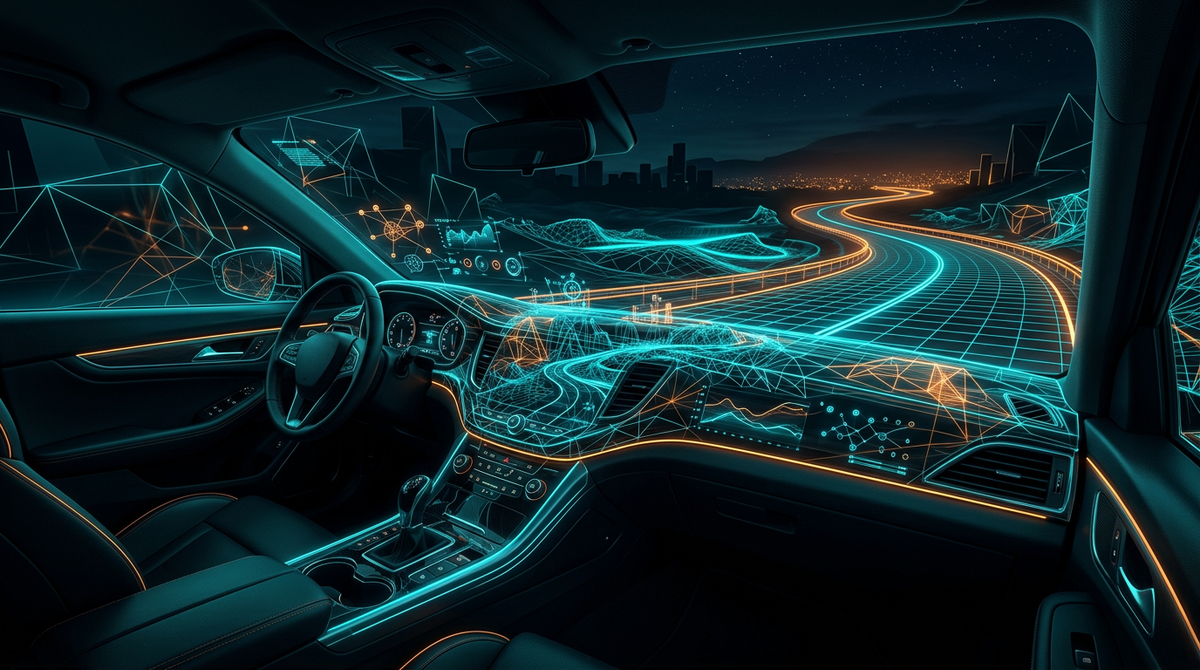
The Software-Defined Vehicle (SDV) is more than just a car with an iPad; it is a mobile data center that must understand the fluid dynamics of traffic and human behavior. A significant hurdle in the development of SDVs is the quality of training data. Traditional Large Language Models are trained on the internet, but "the internet doesn't have gravity," as one CEO recently put it. To train a vehicle to understand physics, developers are increasingly turning to video game data.
Gaming environments provide a "ground truth" that the messy, uncurated real world cannot always offer. In a high-fidelity simulation or a physics-based game, every action has a mathematically defined consequence. This allows SDV developers to train AI agents in varied, high-stakes environments—like a rainy mountain pass or a crowded city center—without the risk of physical damage. Companies like Nvidia are already leveraging this by providing "AI factories" for startups to run these massive, game-engine-driven simulations.
As vehicles become more reliant on OTA (Over-The-Air) updates and modular software stacks, the underlying models will need constant refinement. The transition to SDVs hinges on the ability to update a car's "driving brain" as easily as a smartphone app. By using gaming data and synthetic environments, manufacturers can accelerate this development cycle, ensuring that the software-defined vehicle is not just connected, but also physically intelligent.
Source: TechCrunch