The Vision Gap: Why Tesla’s Robotaxi Struggles with Nighttime 'Grey Kittens'
Elon Musk has clarified that the current limitations for Tesla's Robotaxi in low-light conditions are linked to the difficulty of vision-only systems detecting small animals. The reliance on cameras over LiDAR remains a central point of contention in the ADAS industry.
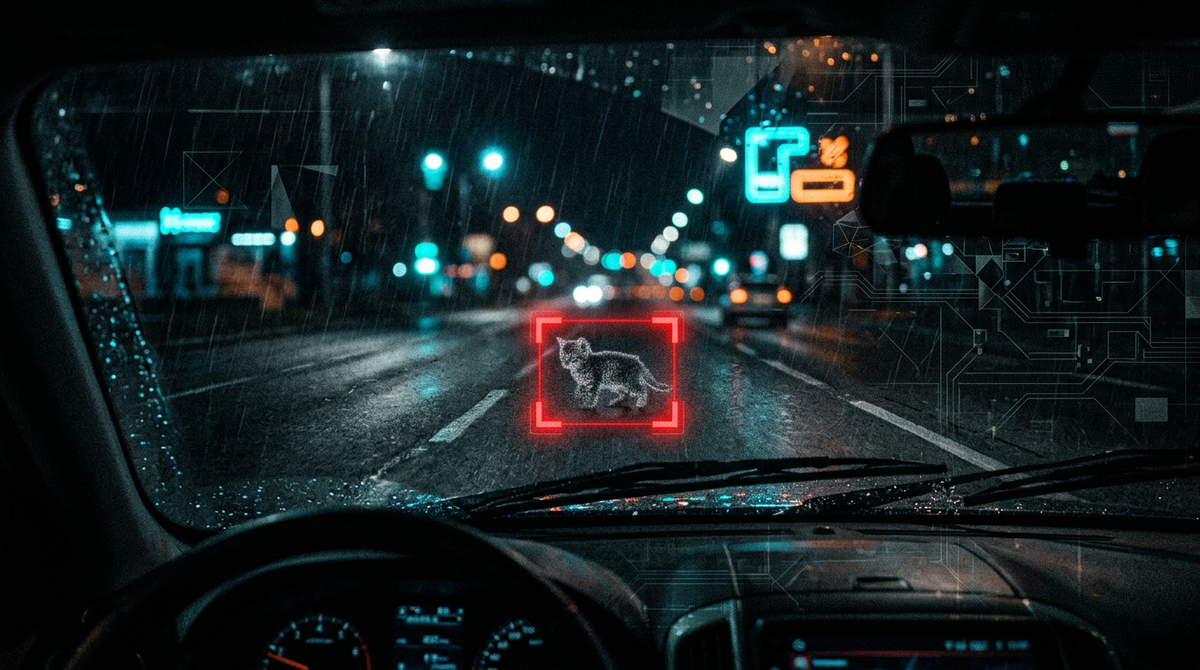
The debate over "Vision vs. LiDAR" has reached a new chapter as Tesla's Robotaxi faces challenges with nighttime operations. Elon Musk recently noted that the primary hurdle for the fleet’s 24/7 deployment is the difficulty vision-only systems have in detecting "grey kittens on grey tarmac" during low-light hours. This admission highlights a critical edge case for Advanced Driver Assistance Systems (ADAS) that rely solely on optical sensors.
While Tesla has doubled down on its belief that human-like vision is sufficient for full autonomy, competitors continue to integrate LiDAR and radar to provide a redundant "depth map" that is unaffected by lighting conditions. A LiDAR sensor would easily distinguish a kitten from the pavement based on its physical volume, regardless of color or contrast. However, Tesla’s approach requires the neural network to be trained on millions of variations of low-light, low-contrast scenarios to achieve the same level of confidence.
This technological impasse defines the current ADAS landscape. As Tesla works to solve these "corner cases" through massive compute and video training data, the rest of the industry is watching to see if a vision-only system can ever truly match the reliability of a multi-modal sensor suite in the unpredictable environments of midnight city streets.
Source: Electrek