The Phlebotomy Robot: How Automation is Solving the Healthcare Gap
Vitestro's 'Aletta' robot has successfully automated the blood-drawing process, using near-infrared light and AI-driven precision to locate veins. This marks a significant leap for medical robotics in reducing human error and increasing clinical efficiency.
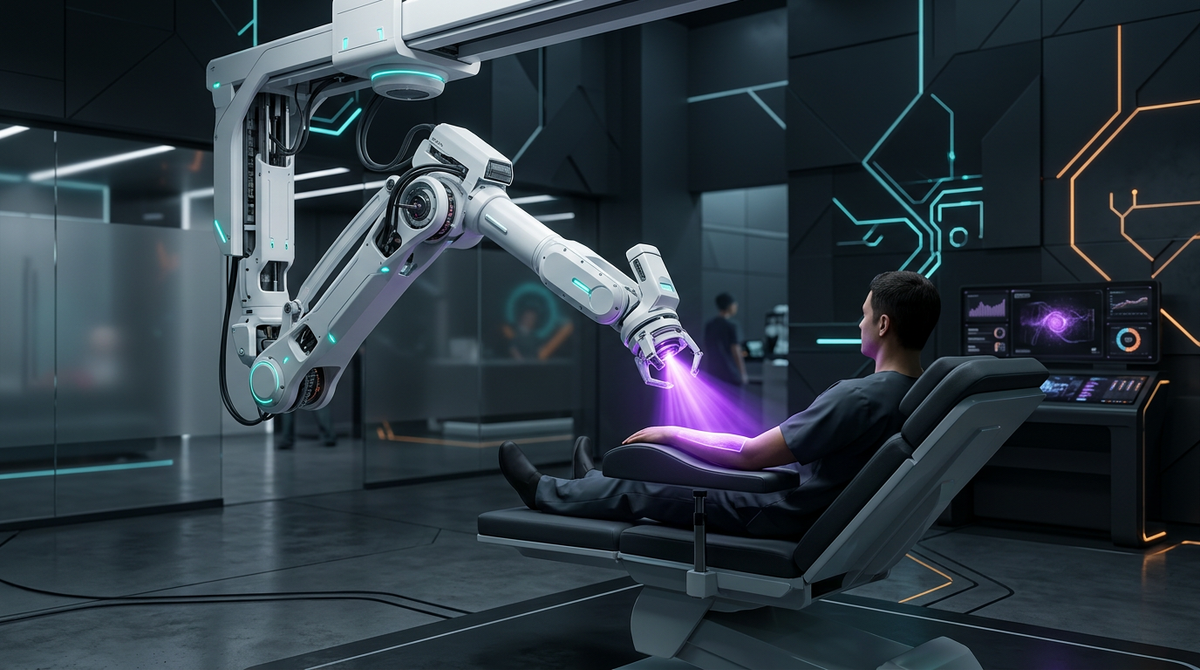
The medical field is witnessing a surge in Robotics designed to handle delicate, high-precision tasks that were previously the exclusive domain of trained specialists. Vitestro’s "Aletta" robot is the latest example of this trend, offering a fully autonomous solution for blood draws (phlebotomy). Patients place their arm in a cradle, and the machine uses a combination of near-infrared light and ultrasound to map the patient's veins in 3D. An AI-driven needle then executes the draw with a level of precision that often surpasses human capability.
This is more than just a convenience; it represents a solution to the global shortage of healthcare workers. Phlebotomy is a repetitive, high-volume task that is prone to human error—especially in patients with "difficult" veins. By automating the process, hospitals can ensure a consistent standard of care while freeing up human nurses for more complex clinical duties. The Aletta robot incorporates multiple layers of safety sensors to ensure the needle only engages when the arm is perfectly still and the vein is accurately targeted.
The success of Aletta highlights the growing trend of "Embodied AI" in healthcare, where the software's ability to "see" and "feel" (through tactile and visual sensors) allows it to interact safely with the human body. As the robot moves from clinical trials to wide-scale deployment, it paves the way for a future where routine medical procedures are handled by specialized robotic kiosks, transforming the patient experience from a stressful event into a streamlined, automated interaction.
Source: IEEE Spectrum