The New Frontline: Autonomous ATVs and the Hunt for Sub-$150K Interceptors
From autonomous ground vehicles in Ukraine to $150,000 drone interceptors, the landscape of electronic and autonomous warfare is shifting toward low-cost, high-volume systems.
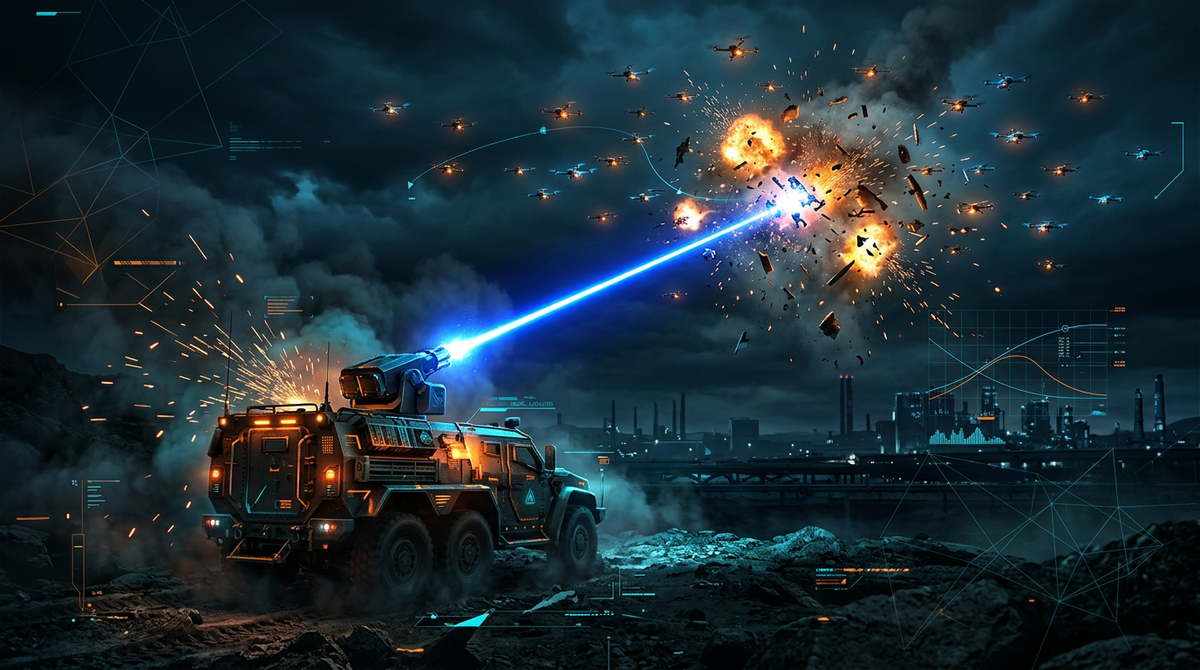
The conflict in Ukraine has become the world’s most significant laboratory for Neo-Defense Tech. For the first time, American autonomous ground vehicles (AGVs)—specifically Forterra’s self-driving ATVs—are being used in active combat zones. These systems represent a shift away from "exquisite," multi-billion dollar platforms toward rugged, autonomous systems that can perform logistics and medical evacuations in "denied" environments where GPS and communications are jammed.
The democratization of drone warfare has created a "cost quandary" for the Pentagon. Using a million-dollar missile to down a $500 hobbyist drone is economically unsustainable. In response, the U.S. Army is fast-tracking the search for counter-drone interceptors priced under $150,000. Companies like X-Bow Systems and Lockheed Martin are racing to fill this gap. Lockheed’s Morfius X-Rotor, for instance, is designed to "fry" up to 50 enemy drones in a single flight using directed energy or high-powered microwaves—a perfect example of a recoverable, low-cost-per-kill system.
Furthermore, the integration of AI into these systems is moving toward the "edge." The Marine Corps’ adoption of the "Bullfrog" autonomous weapon system shows a commitment to AI-powered kinetic defenses that can identify and track swarms of targets faster than a human operator. As these technologies mature, the focus is shifting toward "jam-resistant" communications and autonomous decision-making that allows drones to operate even when the link to the pilot is severed. This is the era of the "Atal Scale"—where quantity and AI-driven autonomy have a quality all their own.
Source: Breaking Defense / C4ISRNet