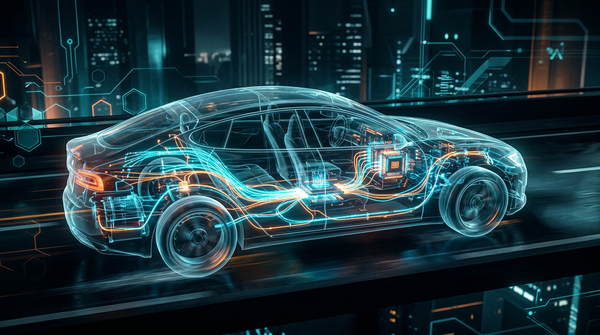
The Multi-Layered Safety Mandate for Physical AI at Scale
As physical AI transitions from research labs to public roads and factories, safety must be integrated into every layer of the technology stack, from silicon to software. Integrated safety 'HALOs' are becoming the industry standard to ensure reliable real-world interactions.

Physical AI is undergoing a radical transition from controlled research environments to large-scale commercial deployment. Unlike digital AI, which operates in the abstract world of text and images, physical AI must interact with the laws of physics, unpredictable weather, and human behavior. This shift demands a fundamental rethinking of safety architectures, moving beyond simple software patches to a comprehensive, multi-layered approach.
According to recent industry projections, the installed base of Level 3 to Level 5 autonomous vehicles could reach 49 million by 2035. Simultaneously, the robotics sector is expected to see millions of units deployed across logistics and manufacturing. The sheer scale of this rollout means that 'safety-by-design' is no longer a luxury but a prerequisite. Developers are now focusing on safety 'HALOs'—a multi-tiered framework that ensures a machine can remain safe even when individual components fail or encounter edge cases.
At the foundational layer, hardware must support deterministic processing to ensure that safety-critical commands are executed without delay. Above the silicon, the software layer utilizes diversified sensor fusion—combining LiDAR, radar, and cameras—to create a redundant perception system. Finally, the agentic layer uses generative models to reason through complex scenarios, such as navigating a flooded street or avoiding a sudden obstacle. By integrating safety at every layer, the industry aims to build the public trust necessary for the widespread adoption of autonomous machines.
Source: NVIDIA Blog