The Lego Era of Robotics: Waiting for the Foundation Model Moment
Robotics is currently in its 'Lego era,' characterized by the assembly of basic building blocks rather than a unified 'ChatGPT moment.' Experts suggest that the missing link is a foundation model capable of generalized movement across space and time.
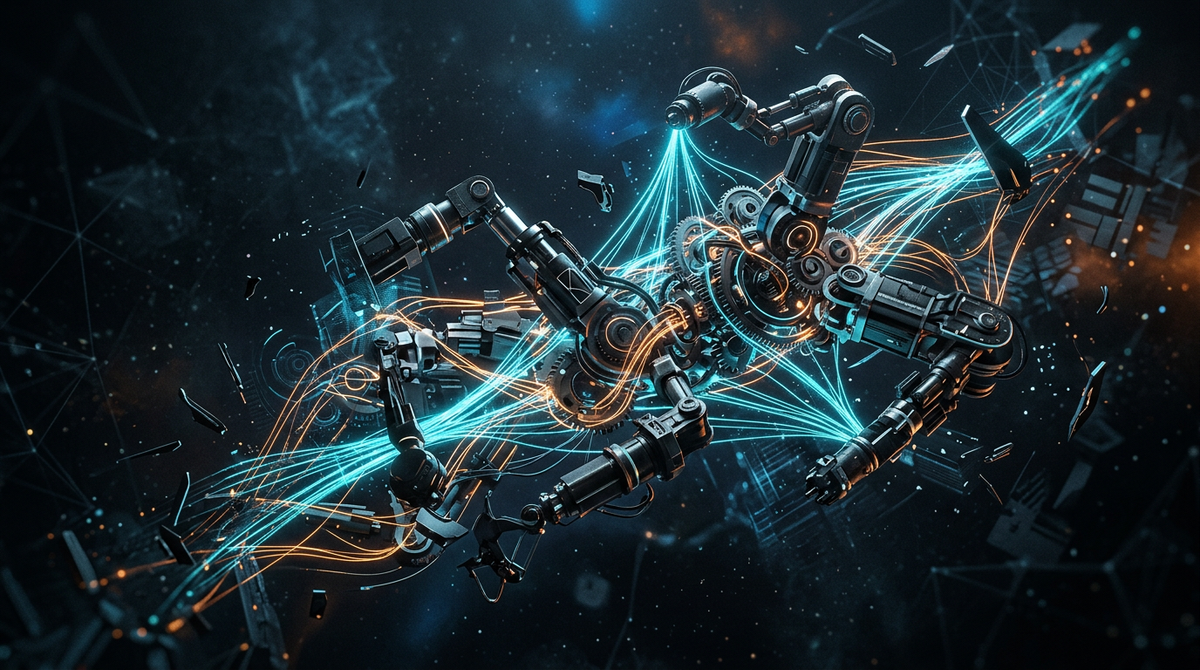
Despite the rapid advancement of generative AI, robotics has yet to experience its "ChatGPT moment"—a single, breakthrough event that demonstrates universal utility. According to industry veterans, we are currently in the "Lego era" of robotics. We have the individual components: high-torque actuators, precise sensors, and powerful compute modules. However, the software glue that allows a robot to perform a task it wasn't specifically programmed for remains elusive.
The primary bottleneck is data. While LLMs were trained on the vast expanse of the internet’s text, robots need "embodied data"—information that describes how to interact with the physical world. This is why startups like General Intuition are now raising billions to build foundation models for motion. The goal is to create AI agents that understand the relationship between their own mechanics and the physical constraints of their environment.
We are seeing the first signs of this shift in specialized applications. In industrial settings, robots are moving away from rigid, pre-programmed paths toward vision-based adaptation. In the home, researchers are experimenting with room-scale cable robots that can tidy up by understanding the geometry of a living space. The "Lego" pieces are finally being assembled into more coherent systems, but the industry is still waiting for the unified model that will allow a robot to walk into any room and understand its purpose without a line of custom code.
Source: TechCrunch