The Humanoid Challenge: Why General-Purpose Robots Outpace AV Complexity
The complexity of humanoid robots, featuring both locomotive and manipulative capabilities, presents unique compute and security challenges that surpass those of autonomous vehicles.
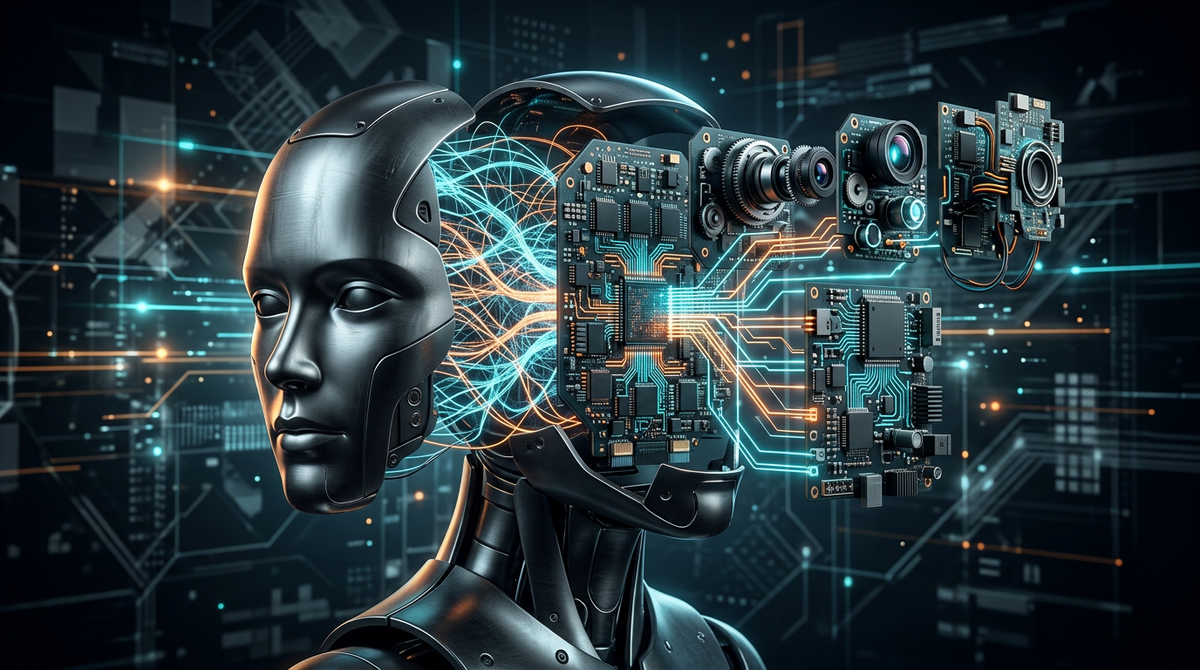
As the robotics industry moves from specialized machines to general-purpose humanoids, the technical hurdles are scaling exponentially. Unlike an autonomous vehicle, which primarily manages a two-dimensional plane with limited degrees of freedom, a humanoid robot must balance, walk, and use fingers to interact with human-centric environments. This dual requirement of mobility and manipulation makes humanoid compute significantly more complex.
Security in these systems is also a paramount concern. A humanoid robot is an edge device with the physical capability to cause harm if compromised. As these robots move closer to human workers in factories or homes, the stakes for safety and security become inseparable. A hacked robot doesn't just lose data; it could potentially perform dangerous physical actions. This requires a new paradigm of "Intelligent Engineering," moving from simple optimization to AI-driven safety protocols that can predict and mitigate risks in real-time.
Startups like General Intuition are now raising massive rounds—reaching $6 billion valuations—to build the foundation models that will govern these interactions. These models train AI agents on how to move through space and time, essentially teaching the robot the "common sense" of physics. The goal is a generalized AI that can be dropped into any robotic form factor and understand how to navigate the world safely. For robotics engineers, the mission is no longer just building a machine that works, but one that can be trusted.
Source: Semiconductor Engineering