The Fine Touch: How Simulation is Solving Robotic Dexterity
Robot training is moving from coarse movements to delicate manipulation using high-fidelity simulations. NVIDIA and its partners are demonstrating how 'rehearsing' in virtual environments allows robots to master tasks like gear alignment and cable connection.
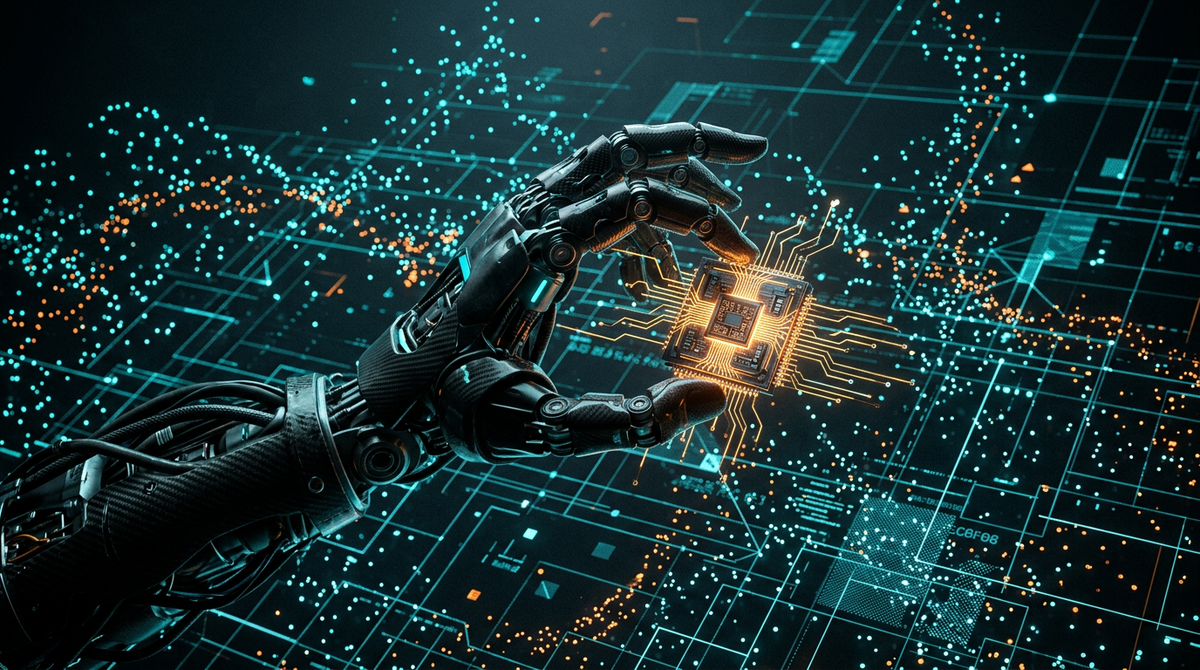
Robotics is undergoing a fundamental shift from simple mobility to complex manipulation. While robots have mastered walking and rolling, the "fine touch" required for industrial assembly—such as aligning gears or plugging in delicate cables—has remained a challenge. At the Conference on Robot Learning (CoRL), NVIDIA revealed how advanced simulation environments are finally bridging this gap, allowing robots to rehearse these intricate tasks millions of times before ever touching a physical object.
The key to this breakthrough is the use of GPU-accelerated physics engines that can simulate not just the geometry of objects, but their material properties and tactile feedback. In these virtual environments, robots use reinforcement learning to discover the optimal way to handle flexible materials like wires or rigid components with tight tolerances. This "Sim-to-Real" pipeline dramatically reduces the time and cost of training, as a robot can experience years of practice in just a few hours of compute time.
Industry experts suggest that we are currently in the "Lego era" of robotics, where the hardware building blocks are ready, but the software intelligence is still being assembled. By using simulation as a primary training ground, researchers are creating foundation models for movement. These models will eventually allow a robot to walk up to a new task and, using its pre-trained understanding of physics and manipulation, perform it with minimal human intervention. The goal is a "ChatGPT moment" for robotics, where general-purpose agents can handle the messiness of the real world with human-like dexterity.
Source: NVIDIA Blog