The Cybercab Dilemma: Why Autonomy is Banning Children
Tesla’s Cybercab introduces strict age restrictions, banning passengers under 13 even when accompanied by adults. This highlights the complex safety and liability hurdles facing Level 5 autonomous systems.
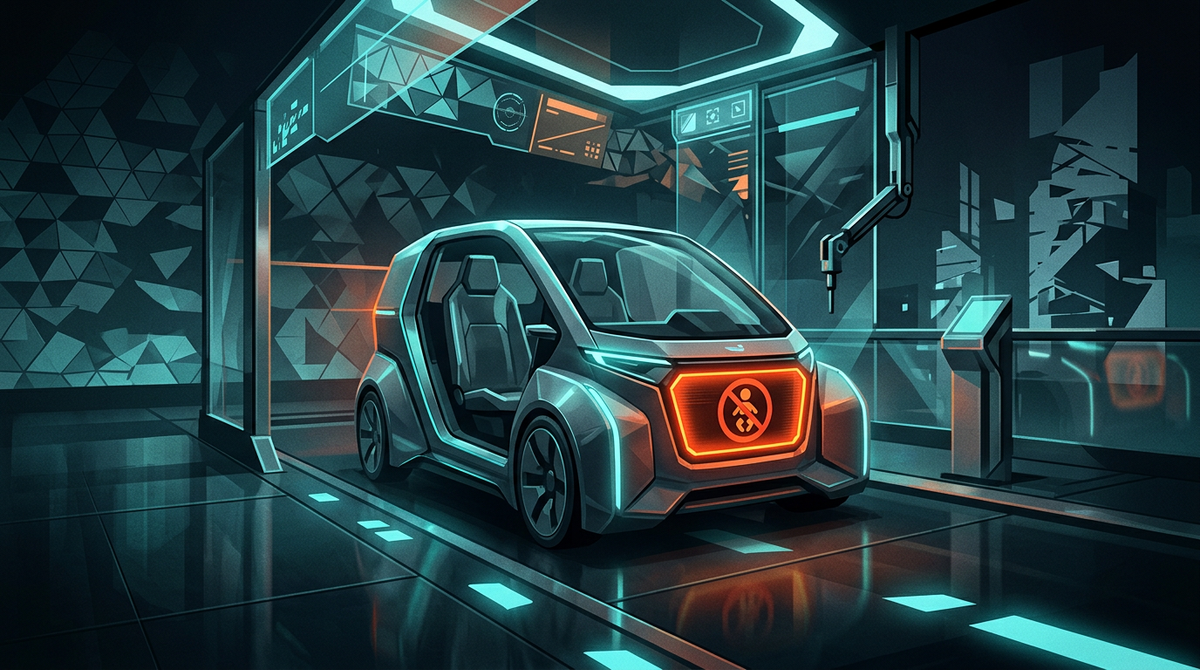
Tesla’s Cybercab rollout has hit a surprising regulatory and safety snag: a total ban on passengers under the age of 13. Unlike the Model Y SUVs currently used in Tesla’s pilot programs, the purpose-built Cybercab features no steering wheel or pedals, making it a "pure" autonomous vehicle. However, the company has determined that the risks associated with younger passengers—who may not be able to follow safety protocols in the absence of a human driver—require a strict age limit.
This move underscores the ADAS and autonomy industry's ongoing struggle with edge cases. While an adult can be expected to interact with emergency interfaces or follow instructions during a system disengagement, children present a different set of behavioral variables. By setting a hard age limit, Tesla is attempting to simplify the safety validation process for its Level 5 ambitions.
However, this restriction raises questions about the Cybercab’s utility as a mass-market transportation solution. If families cannot use the service for school runs or weekend outings, the addressable market for the Cybercab may be more limited than originally envisioned. It remains to be seen if this is a permanent safety feature or a temporary measure while the AI learns to manage younger, more unpredictable occupants.
Source: TechCrunch