The Bullfrog's Leap: AI-Driven Defense and the End of the Cheap Drone Era
The Marine Corps has selected the AI-powered Bullfrog system to defend against the growing threat of drones. This move highlights the shift toward autonomous, non-kinetic, and cost-effective counter-UAS technology.
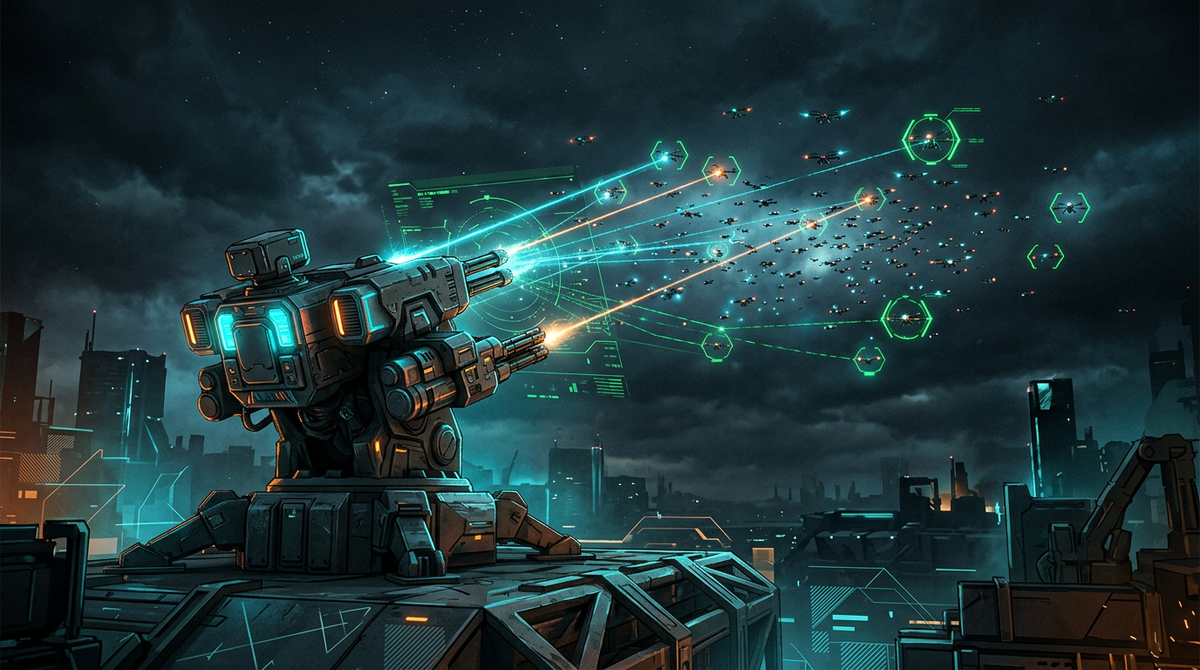
The battlefield in Ukraine has fundamentally altered the Pentagon's perspective on drone warfare. The proliferation of low-cost, one-way attack drones has rendered traditional, multimillion-dollar missile defenses economically unsustainable. In response, the U.S. Marine Corps has turned to 'Bullfrog'—an AI-powered autonomous weapon system designed to intercept uncrewed aerial systems (UAS) with surgical precision.
Bullfrog, developed by Allen Control Systems, represents the 'Neo-Defense' philosophy: using edge-AI and advanced computer vision to solve kinetic problems. Unlike human-operated machine guns, which struggle to track small, fast-moving FPV drones, the Bullfrog system uses proprietary algorithms to calculate lead times and ballistic trajectories in milliseconds. Once a target is identified, the system can neutralize it with minimal ammunition, drastically lowering the 'cost-per-kill.'
This selection follows a broader trend of 'non-kinetic' and low-cost interceptor development within the DoD. Companies like CACI and AeroVironment are also securing massive contracts for counter-UAS technologies that use electronic warfare or 'fried' circuitry to drop drones from the sky. As drone swarms become a standard feature of modern conflict, the ability of AI to act as a force multiplier for point defense will be the difference between tactical success and catastrophic vulnerability. The transition to autonomous defense systems is no longer a luxury; it is a necessity for the 'speed of relevance' in AI warfare.
Source: C4ISRNET