The Autonomy Mandate: Pentagon Restructures for AI Warfare and Cislunar Defense
The U.S. Army is restructuring to prioritize autonomous warfare, standing up the Futures and Autonomy Command. Concurrently, the Space Force is eyeing cislunar capabilities to secure the high ground beyond Earth's orbit.
The U.S. Department of Defense is undergoing a radical organizational shift to prepare for the age of AI-driven conflict. The Army has recently converted its Futures and Concepts Command into the Futures and Autonomy Command. This new entity will serve as a component under the broader Autonomous Warfare Command, with a mission to streamline the acquisition and deployment of robotic combat systems. The goal is to move past experimental prototypes and field autonomous units at scale.
This shift is supported by a massive funding request from Defense Secretary Pete Hegseth, who is seeking $50 billion for mass drone production. This reflects a recognition that "unilateral disarmament" in AI is not a viable strategy in the current geopolitical climate. The information war is also a priority, with the GenAI.mil platform seeing over 2 million users in its first week, helping the Pentagon manage information and perception in a crowded digital battlefield.
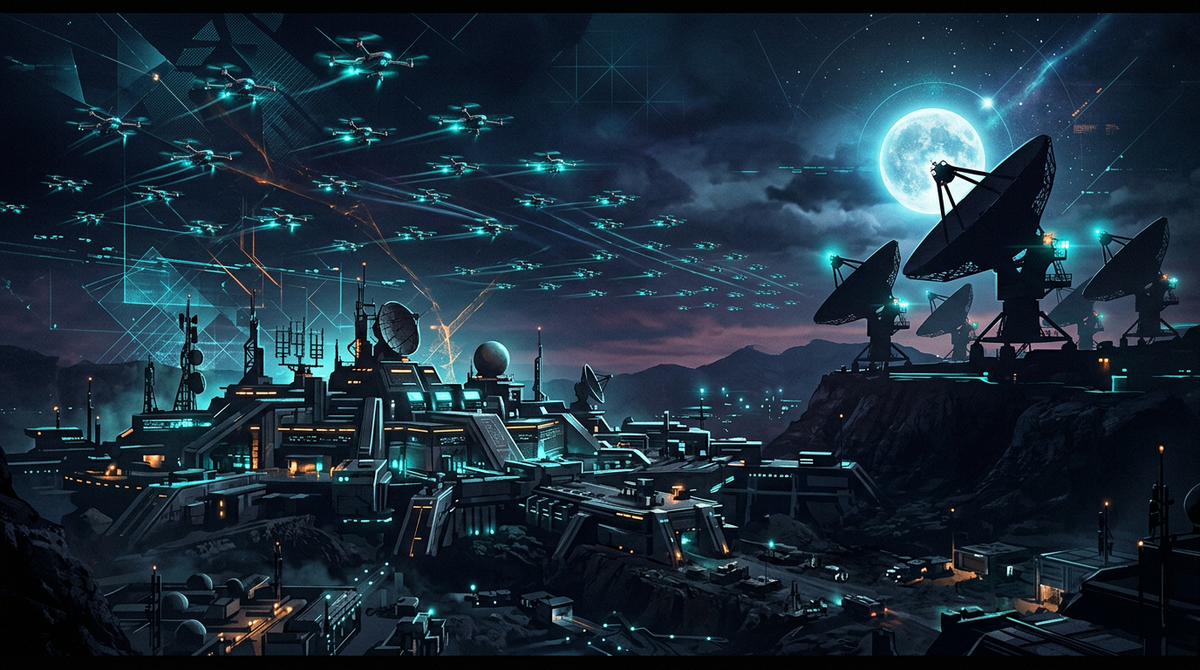
Looking upward, the Space Force is accelerating plans for cislunar warfare. Major General Stephen Purdy has indicated that the service aims to field capabilities in the space between the Earth and the Moon by the end of FY2029. As nations compete for dominance in this high-ground environment, the development of autonomous sensors and interceptors will be critical for securing orbital and cislunar assets.
Source: Defense One