Simulating Reality: How Frontier AI Agents are Building the Future of Physical AI
Frontier AI agents are revolutionizing how developers bridge the gap between abstract ideas and complex 3D simulations. By combining LLMs with NVIDIA Omniverse, the industry is entering a new era where agentic workflows automate asset assembly and physics validation.
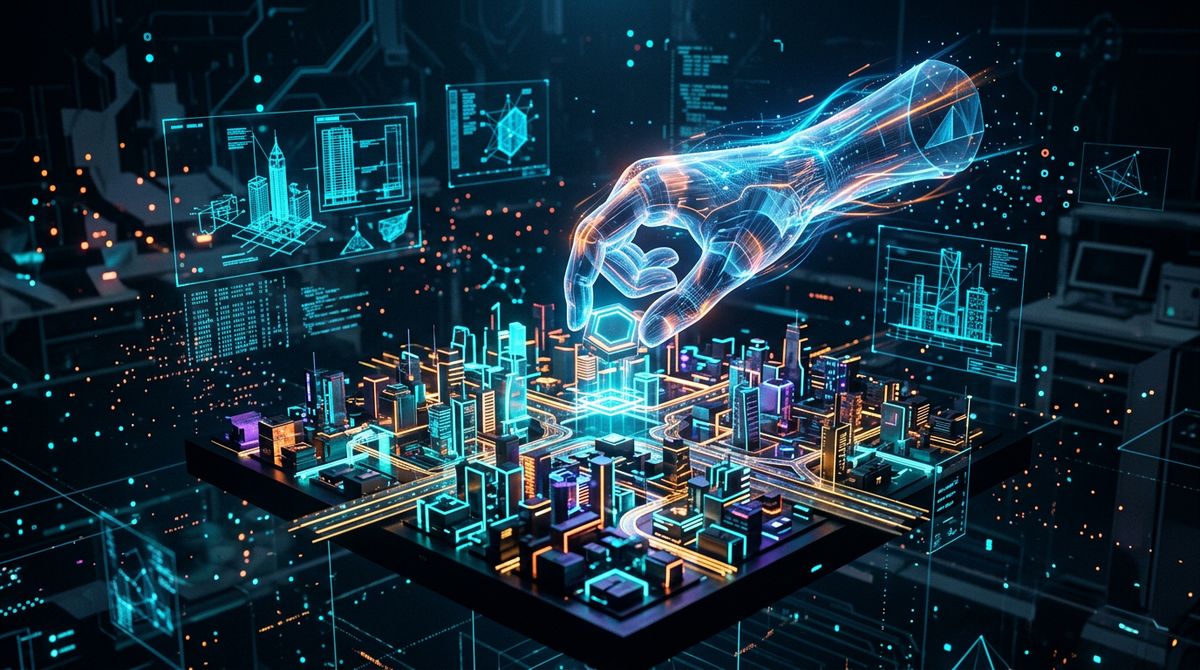
The transition from a conceptual design to a functional 3D simulation has historically been a bottleneck in the development of Physical AI. Traditionally, this process required manual labor to assemble high-fidelity assets, connect disparate physics engines, and verify that the virtual environment adhered to real-world constraints. However, a new paradigm is emerging through the integration of frontier AI agents within the NVIDIA Omniverse ecosystem.
These AI agents act as intelligent intermediaries, translating natural language descriptions into complex simulated scenes. For developers, this means the ability to describe a robotic workcell or a city-scale digital twin and have the AI generate the layout, apply materials, and ensure that the physics—ranging from gravity to friction—are accurately represented. This leap in capability is not just about speed; it is about the fidelity of the simulation. If a robot is to be trained in a virtual environment to operate in the physical world, the simulation must be 'physics-perfect.' Frontier agents provide the iterative checking necessary to catch behavioral anomalies before the code ever touches a real-world actuator.
Furthermore, these agentic workflows allow for rapid prototyping at a scale previously unimaginable. By automating the tedious aspects of scene construction, engineers can focus on the higher-level logic of Physical AI applications. This shift marks the beginning of a cycle where AI builds the very environments used to train the next generation of autonomous systems, creating a self-reinforcing loop of intelligence and physical capability.
Source: NVIDIA Blog