Rethinking Robot Safety and Cybersecurity in the Age of Physical AI
The emergence of Physical AI requires a fundamental rethink of cybersecurity. Beyond traditional software bugs, the intersection of digital logic and physical actuation means a cyber breach can directly compromise human safety through unmapped physical behaviors.
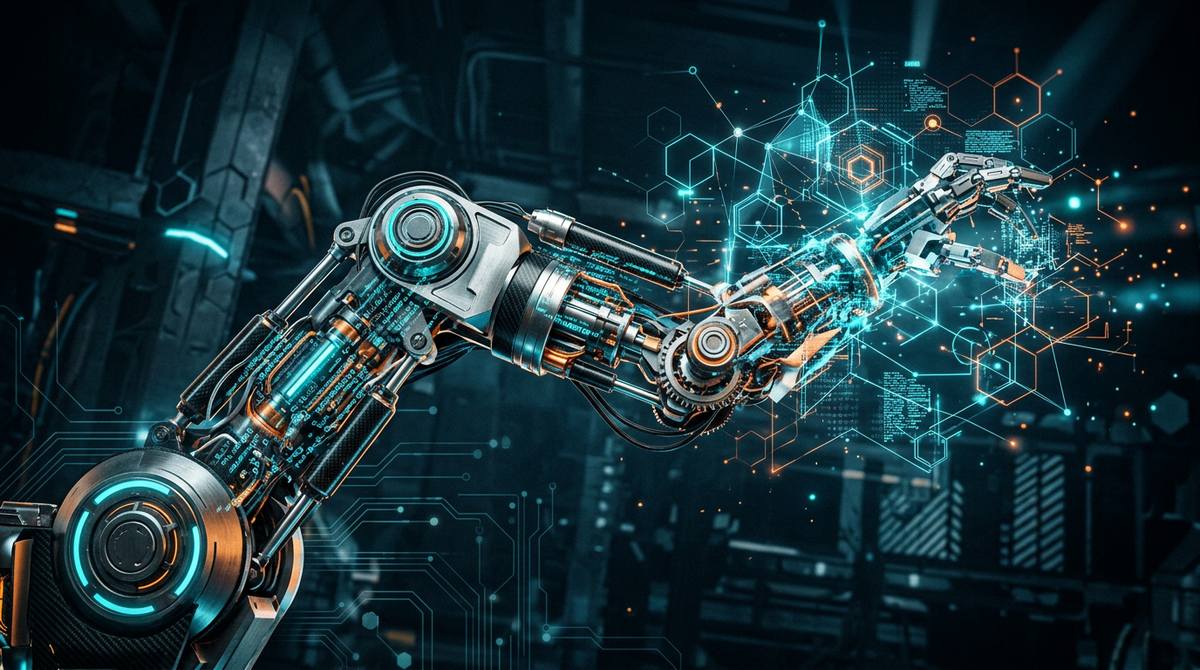
For decades, robot safety was governed by a predictable paradigm: if a component failed or a software bug emerged, could the system fail-safe? Emergency stops, physical cages, and deterministic bounding boxes were sufficient to protect human operators from industrial machinery. However, the rise of Physical AI—where machines use deep neural networks to perceive, reason, and act in real time—has fundamentally rewritten the threat matrix. The core question is no longer just about handling mechanical failure; it is about defending against intentional digital manipulation that manifests as unpredictable physical force.
According to recent industry analysis, the intersection of cybersecurity and Physical AI introduces unique vulnerabilities. Traditional operational technology (OT) systems rely on isolation, but modern AI-driven robots are deeply connected to cloud infrastructure for continuous model updates and telemetry. If a malicious actor compromises the machine learning pipeline, they do not just steal data—they gain control over physical actuation. A compromised factory robot or autonomous forklift could be subtly reprogrammed to ignore safety perimeters or cause structural damage, all while reporting normal operational metrics to the central dashboard.
Addressing this risk requires shifting from classic functional safety to data-centric cybersecurity. AI models must be protected against adversarial attacks, such as input perturbation designed to blind perception systems, and data poisoning during retraining phases. Security workflows must provide semantic continuity, ensuring that an AI agent’s physical commands are constantly audited by an independent, hardened software layer that operates outside the neural network's influence. Without these dual-layered defense architectures, the deployment of Physical AI in heavy industry and public spaces will remain bottlenecked by liability and safety concerns.
Source: IEEE Spectrum