Regulatory Roadblock: NHTSA Demands Tesla Prove Cybercab Safety
The NHTSA has issued a Special Order to Tesla, demanding proof that the steering-wheel-less Cybercab meets federal safety standards. The order places Tesla's vision for autonomous mobility under intense legal scrutiny.
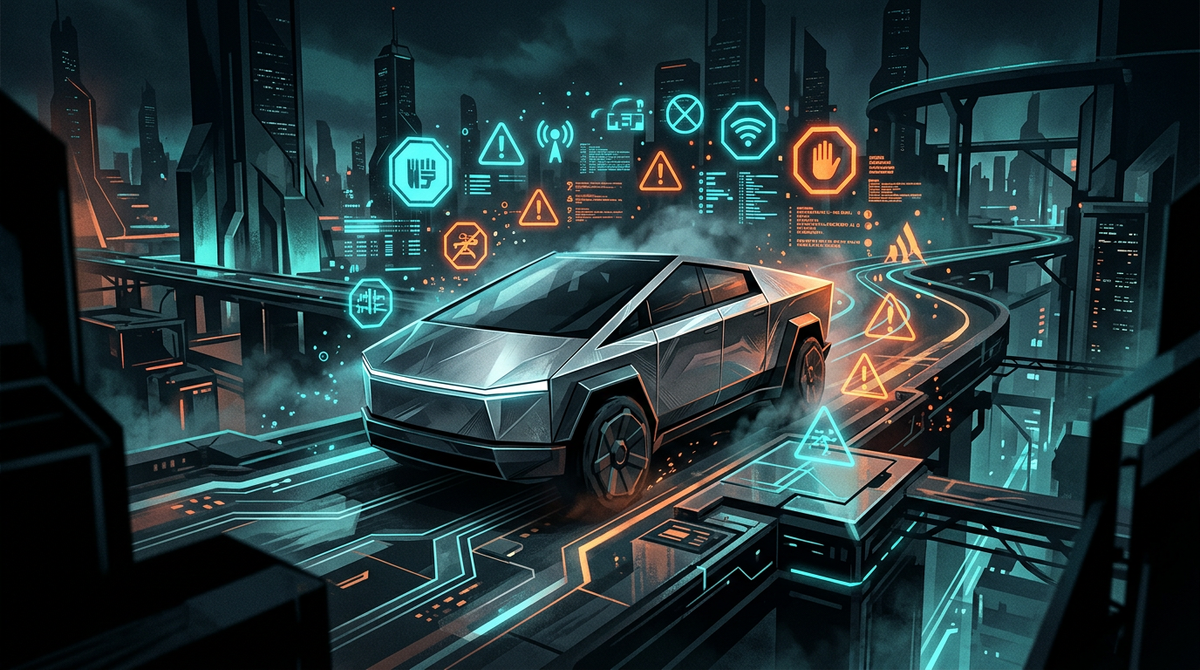
Tesla’s ambitious vision for a steering-wheel-less future has hit a significant regulatory speed bump. The National Highway Traffic Safety Administration (NHTSA) has issued a formal Special Order demanding that Tesla prove the "Cybercab" is legal to sell and operate on public roads. Specifically, the agency is questioning how a vehicle without traditional controls like steering wheels or pedals can comply with Federal Motor Vehicle Safety Standards (FMVSS).
The Cybercab represents Tesla’s "fork in the road" moment, shifting away from driver-assist technologies toward full Level 4 or 5 autonomy. However, the NHTSA order requires Tesla to provide testimony under oath regarding the vehicle's certification. Current US regulations are built around the assumption of a human driver; introducing a vehicle that physically cannot be controlled by a human requires special exemptions or a complete overhaul of existing safety frameworks.
This tension highlights the gap between rapid technological innovation in Advanced Driver Assistance Systems (ADAS) and the slower pace of regulatory evolution. While Tesla has begun soliciting interest for Cybercab fleets, the NHTSA's move suggests that the path to deployment will be paved with legal challenges. For the industry, this case will set a precedent for how "driverless-by-design" vehicles are governed, potentially shaping the future of ADAS and autonomous integration for years to come.
Source: Electrek