Red-Teaming the Road: Using AI to Stress-Test ADAS and Autonomous Systems
Laplace Intelligence is utilizing AI agents and interactive simulations to red-team autonomous systems before they reach the public. Their stress-testing helps identify critical failures in ADAS and robotics under extreme conditions.
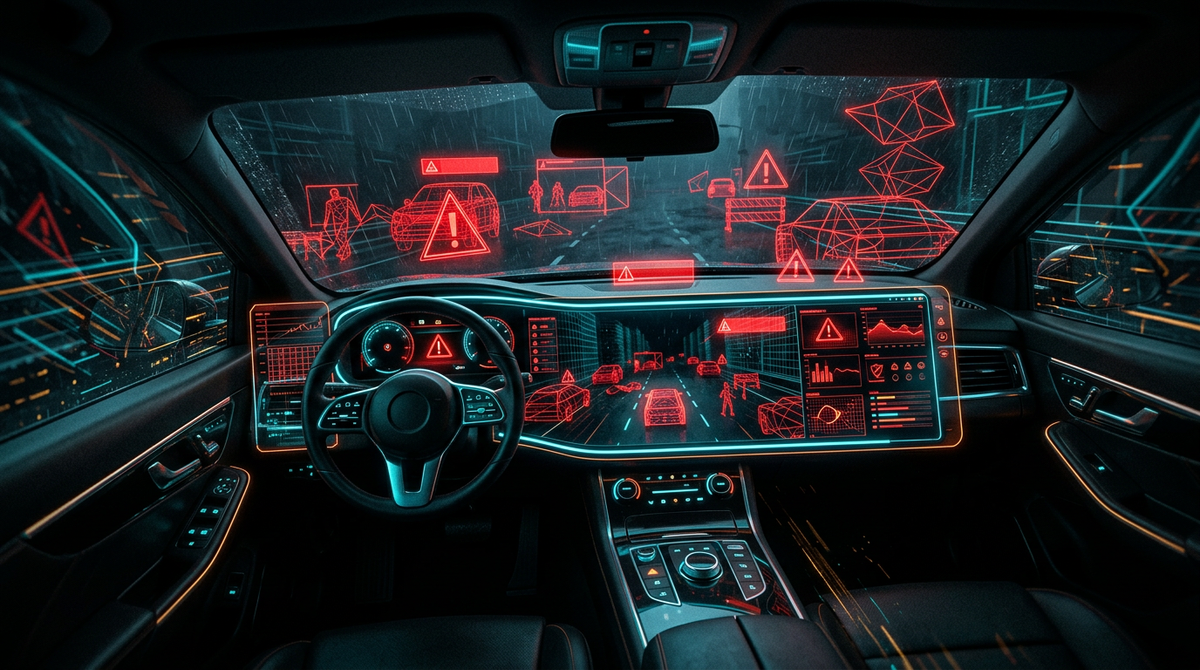
As Advanced Driver Assistance Systems (ADAS) and autonomous robots become more prevalent, the need for rigorous safety validation has never been higher. Laplace Intelligence, a spinout from the University of Michigan, is addressing this by "red-teaming" these systems in virtual environments. By using AI agents to simulate unpredictable human behavior and hazardous conditions, Laplace can identify potential failure points in ADAS software before they manifest on real roads.
Traditional testing often relies on logging miles, but red-teaming focuses on the quality of the challenge. Laplace’s interactive simulations force the autonomous system to react to aggressive drivers, obscured pedestrians, and sensor malfunctions. This approach is critical for Level 2+ and Level 3 ADAS, where the transition between machine control and human intervention is a known safety risk.
The goal is to move beyond simple compliance and toward proactive hazard discovery. By finding the "unknown unknowns"—scenarios that developers hadn't even considered—Laplace provides a safety buffer for the next generation of driver assistance. As regulators increasingly look at how AI systems handle edge cases, this type of adversarial testing will become a mandatory part of the development pipeline for any company deploying autonomous tech.
Source: TechCrunch