Red-Teaming Autonomy: How Stress-Testing AI Prevents Real-World Crashes
Laplace Intelligence is revolutionizing ADAS safety by using AI agents to 'red-team' autonomous systems in virtual environments. By simulating rare and dangerous 'edge cases,' the startup ensures that self-driving cars can handle the unexpected before they ever hit public roads.
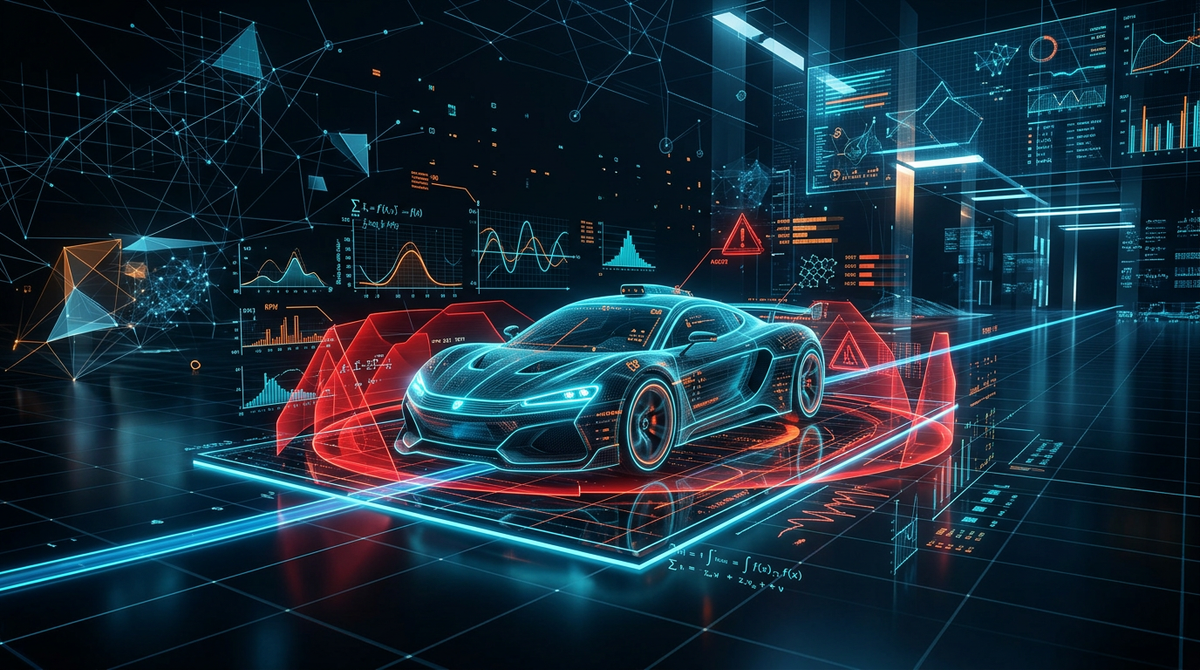
How do you prove a self-driving car is safe when the most dangerous road scenarios happen only once in a million miles? This is the central challenge for Advanced Driver Assistance Systems (ADAS) and full autonomy. Laplace Intelligence, a spinout from the University of Michigan, believes the answer lies in adversarial simulation—essentially 'red-teaming' the car’s AI to find its breaking point.
Using a combination of AI agents and interactive simulations, Laplace creates highly improbable but physically possible scenarios that might confuse a vehicle's sensors or decision-making algorithms. This could involve a pedestrian stepping out from behind a parked truck at the exact moment a glare hits the camera, or a sudden, erratic lane change by an adjacent vehicle. By subjecting the ADAS software to these 'stress tests' in a virtual environment, developers can identify and patch vulnerabilities that would be impossible to find during standard road testing.
This approach moves beyond simple 'if-then' safety checks. It treats the vehicle's AI as a complex system that must be proactively challenged. As ADAS features like lane-keeping and emergency braking become standard, the ability to guarantee performance in edge cases becomes a major market differentiator. Laplace’s work highlights a growing trend in the industry: the most important miles a self-driving car travels are the ones it drives in a simulator.
Source: TechCrunch