Lasers and 3D Prints: The New Arsenal of Autonomous Warfare
From 3D-printed interceptor drones in Japan to laser-downed cartel UAVs in Texas, the frontlines of warfare are being redefined by autonomous combat systems and directed energy weapons.
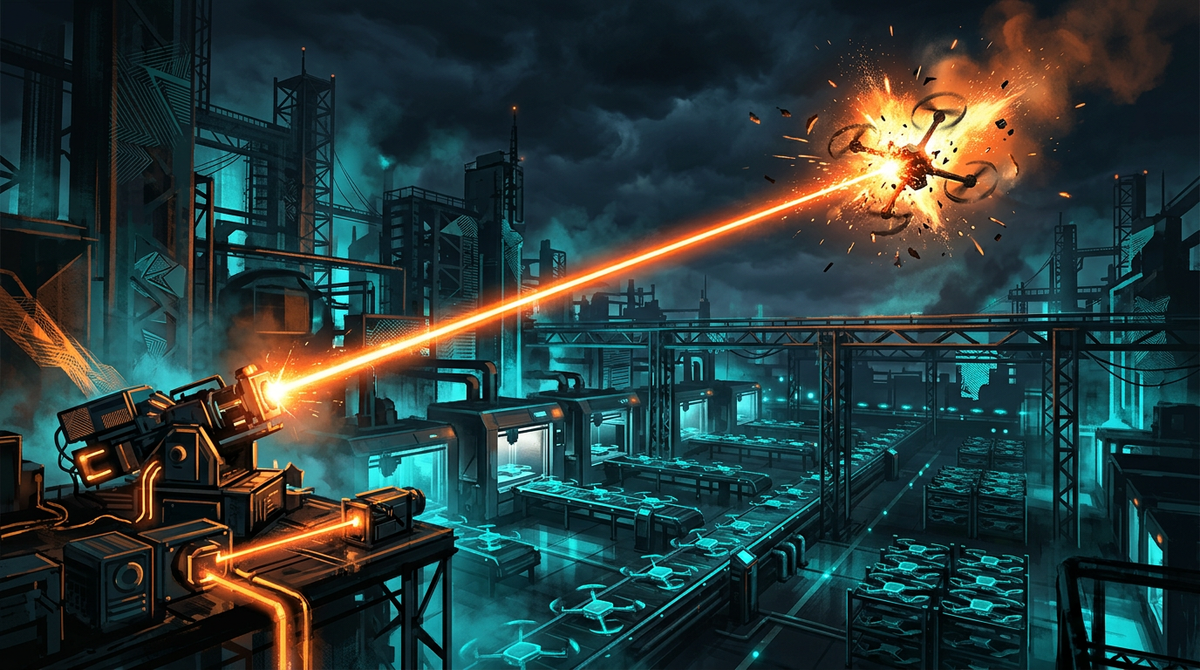
Neo-Defense technology is rapidly evolving from experimental prototypes to frontline essentials. In a significant move for regional security, Japan has approved the mass production of 3D-printed interceptor drones. These low-cost, high-volume units are designed to swarm and neutralize incoming aerial threats, providing a scalable defense against the growing prevalence of drone-based attacks in the Pacific theater.
Simultaneously, the U.S. military has demonstrated the lethal efficacy of directed energy weapons. This week, military units in southern Texas used a laser system to successfully down three Mexican cartel drones near the border. Unlike traditional kinetic interceptors, lasers offer a 'near-zero cost per shot' and infinite magazines, provided there is a power source. This engagement highlights how autonomous and directed energy systems are being deployed not just in traditional war zones, but in domestic security and border enforcement roles.
The trend is clear: the future of defense lies in the rapid manufacturing of autonomous systems and the deployment of electronic and directed energy countermeasures. As nations like the Netherlands and Greece also ink multi-billion dollar deals for multi-layered air defense and interceptor fleets, the 'drone-on-drone' warfare era has officially begun. The focus is shifting from 'bigger fences' to intelligent, automated, and light-speed response systems.
Source: C4ISRNET