Korea’s Manufacturing Might Meets Physical AI Innovation
South Korea is leveraging its manufacturing prowess to build a robust physical AI ecosystem. From heavy industry to consumer robotics, industry leaders are integrating accelerated computing to bridge the gap between digital intelligence and physical execution.
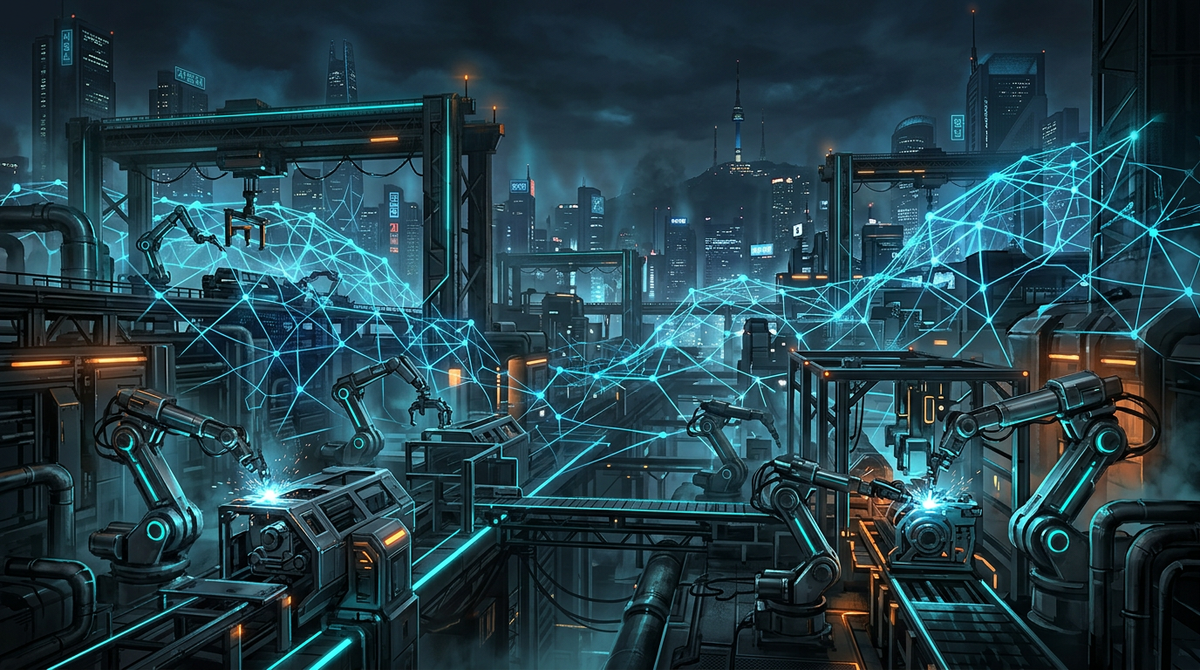
South Korea is rapidly emerging as a global epicenter for Physical AI, the next frontier where artificial intelligence interacts directly with the physical world. By leveraging its deep-rooted strengths in advanced manufacturing and engineering, the nation is moving beyond digital-only AI to create systems that can perceive, reason, and act in real-world environments. This shift is being supported by strategic collaborations that integrate NVIDIA’s accelerated computing stack into the heart of Korean industrial operations.
Key players in the Korean ecosystem are focusing on the development of AI agents capable of navigating complex physical spaces. These applications range from autonomous factory floors to sophisticated service robots. The integration of NVIDIA’s NemoClaw and OpenShell runtimes is providing the foundational architecture for these physical agents, ensuring they can operate with high degrees of autonomy while maintaining rigorous security standards. This "agentic" approach allows for more flexible and adaptive automation compared to traditional programmed robotics.
Furthermore, the collaboration extends into sovereign AI, ensuring that Korea maintains control over its foundational models and data infrastructure. As Physical AI requires massive amounts of real-world data and high-performance compute, the development of localized data centers and specialized semiconductors is critical. This holistic approach—combining software intelligence with hardware resilience—positions South Korea to lead the transition toward a world where AI is no longer confined to screens but is an active participant in the physical economy.
Source: NVIDIA Blog