Isaac ROS 5.0: The Rise of Open-Source Agentic Robotics
The release of Isaac ROS 5.0 marks a milestone in 'agentic' robotics, providing developers with open-source tools to build machines that can perceive, reason, and act autonomously in dynamic environments.
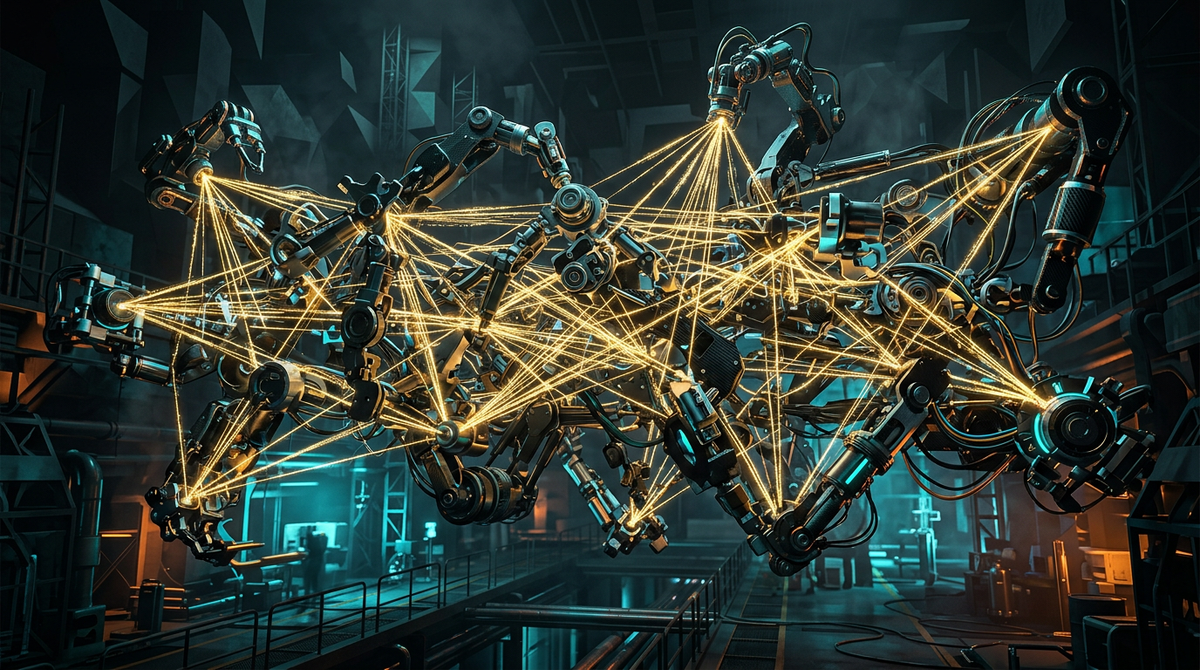
The robotics industry is moving beyond pre-programmed automation toward 'agentic' systems—robots that can sense their surroundings and make independent decisions to achieve a goal. NVIDIA’s launch of Isaac ROS 5.0 is a pivotal moment in this evolution, providing the open-source community with advanced Physical AI models and hardware-accelerated libraries. These tools are designed to help robots navigate the messy, unpredictable reality of the physical world with greater autonomy and safety.
Isaac ROS 5.0 introduces new capabilities for foundation models in robotics. By leveraging large-scale simulation and generative AI, developers can now train robots in virtual environments that perfectly mimic real-world physics. This 'sim-to-real' pipeline allows for the creation of agents that can handle complex tasks—such as warehouse sorting or precision manufacturing—without the need for exhaustive manual coding of every possible scenario. The update also emphasizes safety, providing frameworks for real-time obstacle avoidance and secure communication between multi-robot swarms.
While specialized humanoids like Digit 5 are making strides in factory safety, the Isaac ROS framework provides the underlying intelligence that could power a wide array of robotic forms. By making these sophisticated tools open-source, the industry is lowering the barrier to entry for startups and researchers. We are entering an era where robots are no longer just tools, but intelligent agents capable of working alongside humans in shared spaces.
Source: NVIDIA Blog