Humanoids at Work: Why Shipyards are the New Robotic Frontier
Humanoid robots are moving from labs to heavy industry, with startups like Persona AI focusing on shipyard welding. By targeting specific, high-risk industrial tasks, robotics companies are finally finding the 'killer app' for general-purpose robotic forms.
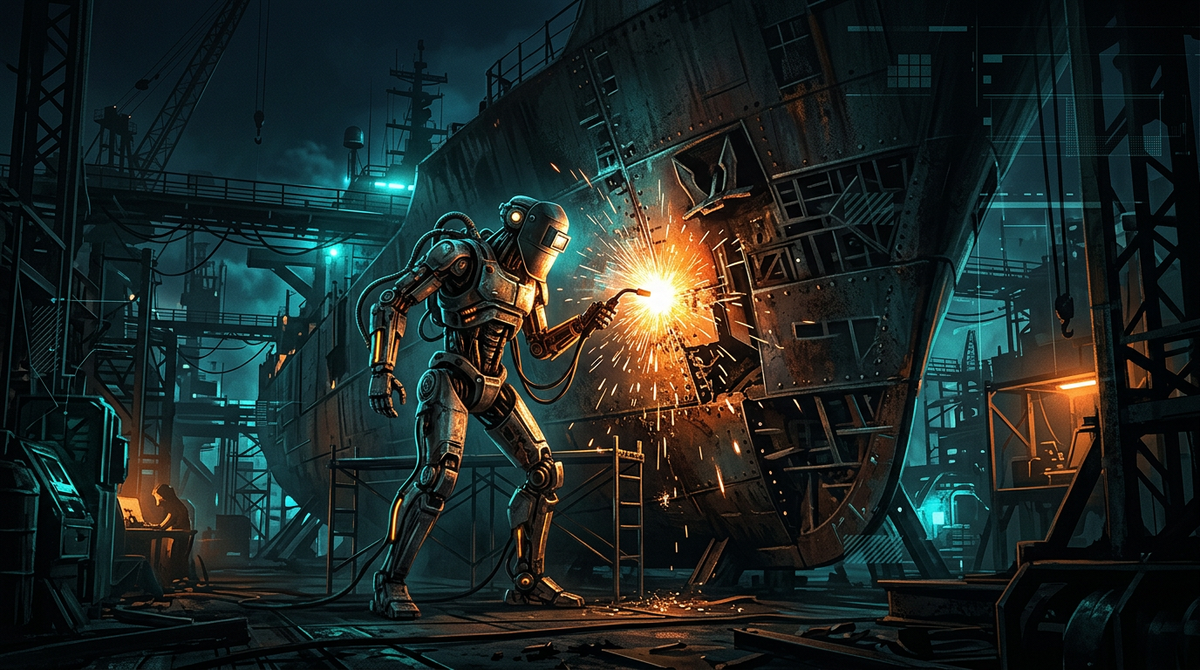
For years, humanoid robots have been the stars of viral dance videos and laboratory demonstrations. However, the industry is entering a more pragmatic phase where "getting a job" is the priority. Persona AI is leading this shift by deploying humanoid robots into one of the most demanding environments on Earth: the shipyard.
Shipyard welding is a grueling, dangerous task that involves working in cramped, hazardous spaces—often at height or in extreme heat. While specialized robotic arms have been used in automotive factories for decades, the unstructured environment of a shipyard requires a more flexible, mobile form factor. The humanoid shape allows these robots to use the same ladders, walkways, and tools as human welders, minimizing the need for expensive facility retrofitting.
This move highlights a broader trend in robotics: the transition from "showbots" to "workbots." By focusing on a specific industrial pain point rather than general-purpose domestic service, companies are proving the economic viability of the humanoid form. As these machines master complex tasks like multi-pass welding in rough environments, they pave the way for a new labor force that can handle the "3D" jobs—dull, dirty, and dangerous.
Source: IEEE Spectrum