Hard Labor: Why Shipyards are the New Frontier for Humanoid Robots
Persona AI is pivoting humanoid robots away from viral videos and toward the gritty reality of shipyard welding. The move represents a shift toward industrial utility for humanoid forms.
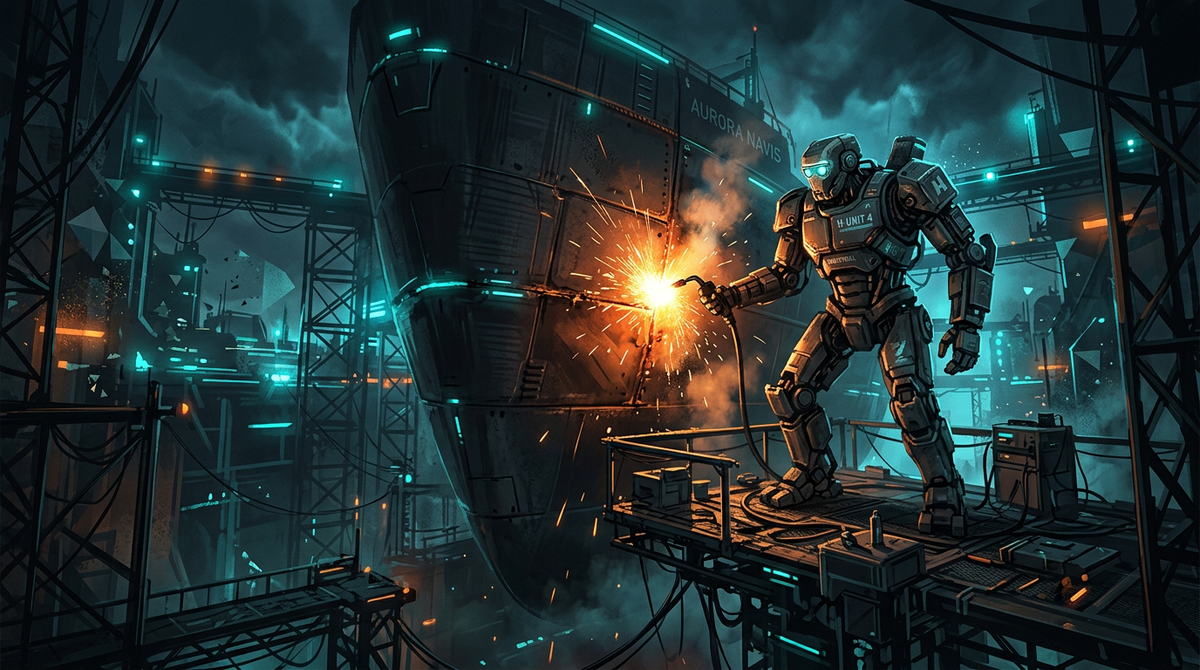
The humanoid robot industry is entering its 'workforce' phase. While companies like Boston Dynamics and Tesla have dominated headlines with acrobatic displays and domestic promises, Persona AI is focusing on a more rugged application: shipyard welding. By targeting one of the most dangerous and labor-intensive jobs in manufacturing, Persona AI is attempting to prove that humanoid forms aren't just for show—they are for hard labor.
Shipyard welding is an ideal 'first job' for advanced humanoids because it requires a combination of high precision, mobility in cramped spaces, and the ability to operate in environments built for humans. Unlike traditional stationary industrial robots, humanoids can navigate ladders, narrow corridors, and uneven decks without requiring a total redesign of the shipyard infrastructure. This 'drop-in' capability is the holy grail for industrial automation.
The shift toward industrial humanoids is driven by a global shortage of skilled welders and a growing need for productivity in shipbuilding. By deploying AI-driven robots that can learn complex welding paths through imitation and spatial awareness, Persona AI aims to augment the existing workforce. This marks a significant departure from the 'general purpose' robot dream, focusing instead on mastery of a high-value, high-danger niche.
Source: IEEE Spectrum