Harbinger’s $240M Bet on Software-Defined Defense and Logistics
Harbinger's $240M funding round signals a major shift toward Software-Defined Vehicles (SDVs) in the commercial and defense sectors. Their modular electric platform prioritizes vertical integration and software-first architecture.
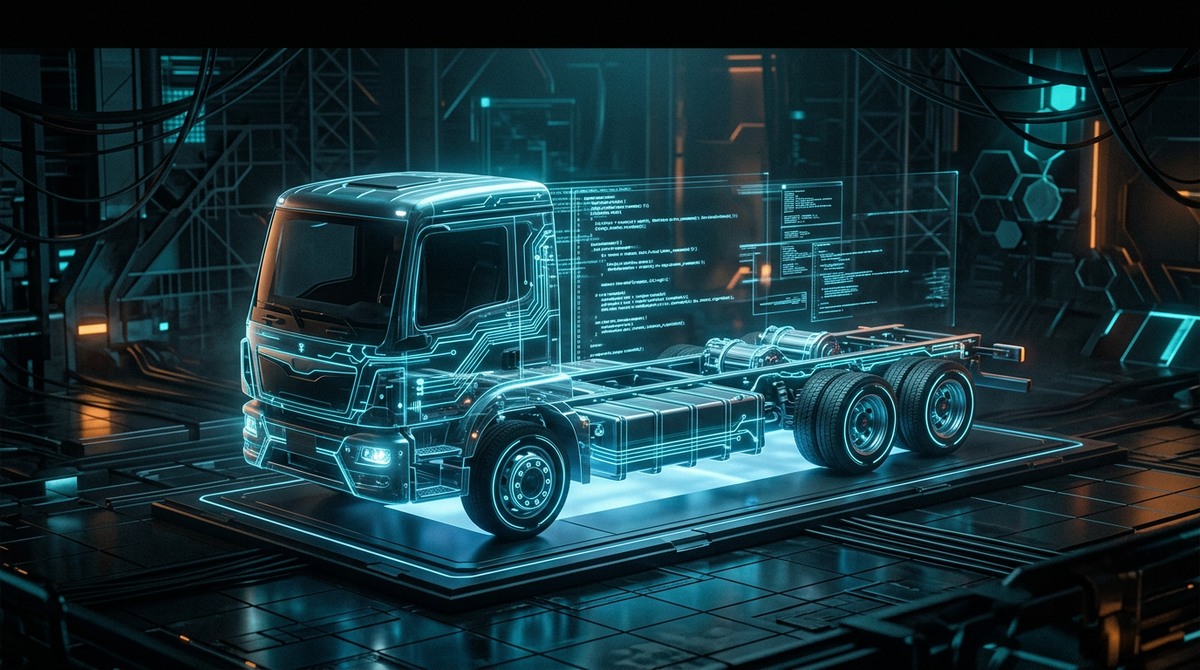
The Modular Future of Specialty Fleets
The era of the Software-Defined Vehicle (SDV) is no longer confined to luxury sedans. Harbinger, a Los Angeles-based startup, recently secured $240 million in funding to bring a software-centric approach to medium-duty electric trucks and military platforms. This brings their total capital raised to over $650 million, highlighting investor confidence in the "chassis-up" redesign of commercial and defense transport.
At the heart of Harbinger’s strategy is a proprietary electric platform that treats the vehicle as a unified computational system rather than a collection of disparate hardware parts. By controlling the entire stack—from the powertrain to the fleet management software—Harbinger can offer over-the-air (OTA) updates that improve efficiency, performance, and safety over the vehicle's lifespan. This is particularly critical for their new expansion into defense, where adaptability on the battlefield is a primary tactical advantage.
The company’s "driverless platform" for the military represents the apex of SDV utility. In a combat or emergency response scenario, a vehicle that can be remotely reconfigured or autonomously deployed changes the logistics of risk. By stripping away the legacy constraints of internal combustion engine (ICE) design, Harbinger is building a modular hardware layer that serves as a vessel for increasingly sophisticated autonomous and semi-autonomous software, effectively turning trucks into mobile data centers.
Source: TechCrunch