Gecko Robotics and the US Navy: Engineering the Future of Predictive Maintenance
Gecko Robotics has secured a landmark deal with the US Navy to bring predictive maintenance and robotic inspection to the fleet. This move away from traditional dry-docking marks a new era in naval readiness.
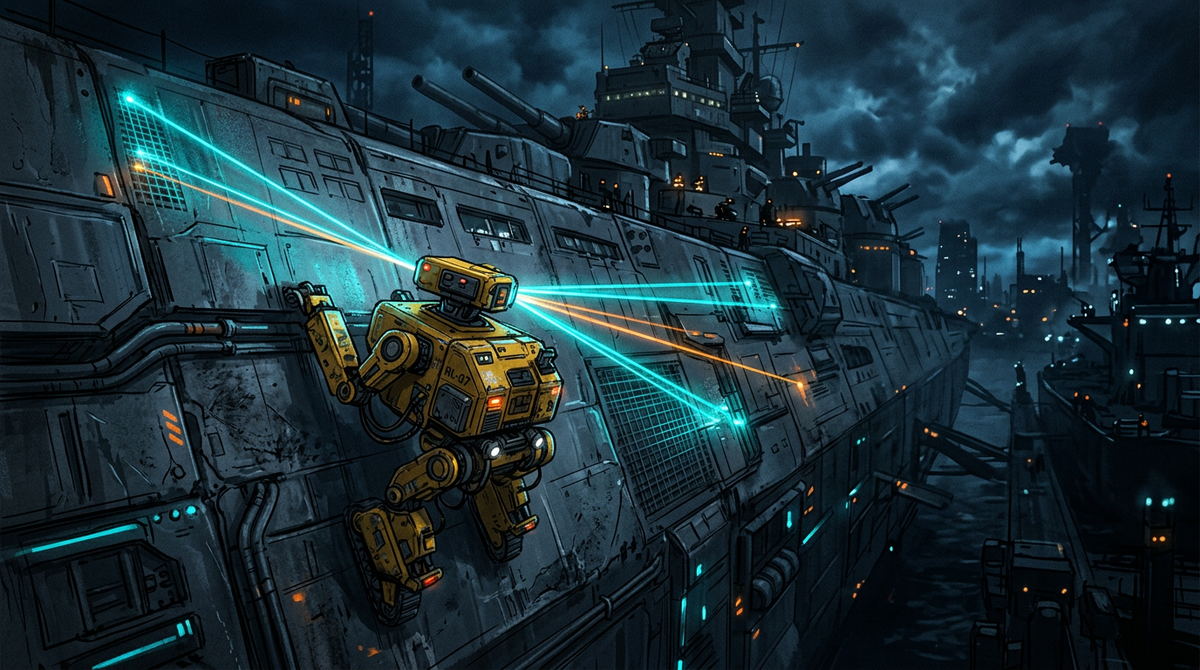
The U.S. Navy is turning to robotics to solve one of its most persistent problems: hull degradation and maintenance bottlenecks. Gecko Robotics recently landed its largest contract to date, a five-year deal aimed at automating the inspection of the Navy's fleet. By using robots that can 'crawl' across ship hulls and use advanced sensors to detect structural weaknesses, the Navy hopes to move from a reactive maintenance model to a predictive one.
Traditional naval maintenance often involves ‘blind’ dry-docking, where ships are taken out of service for inspection without knowing exactly what repairs are needed. The data-rich approach offered by Gecko’s robots allows for 'digital twins' of these vessels to be created. These digital models can predict when a component will fail, allowing the Navy to plan maintenance in advance and keep ships in the water for longer periods.
This contract is a significant validation for the industrial robotics sector. It demonstrates that the most valuable robots aren't always the ones that look like humans, but the ones that can go where humans can't—like the underside of a destroyer in high-seas conditions. As autonomous underwater drones and robotic inspectors become more integrated into the AUKUS partnership and global naval strategy, the line between 'maintenance' and 'operational readiness' is becoming increasingly blurred.
Source: TechCrunch