From Lab to Ladder: Humanoid Robots Take on Shipyard Welding
Humanoid robots are moving from viral videos to the shipyard, with Persona AI focusing on the grueling task of industrial welding. This shift represents a move toward 'blue-collar' robotics that solves real-world labor shortages in heavy industry.
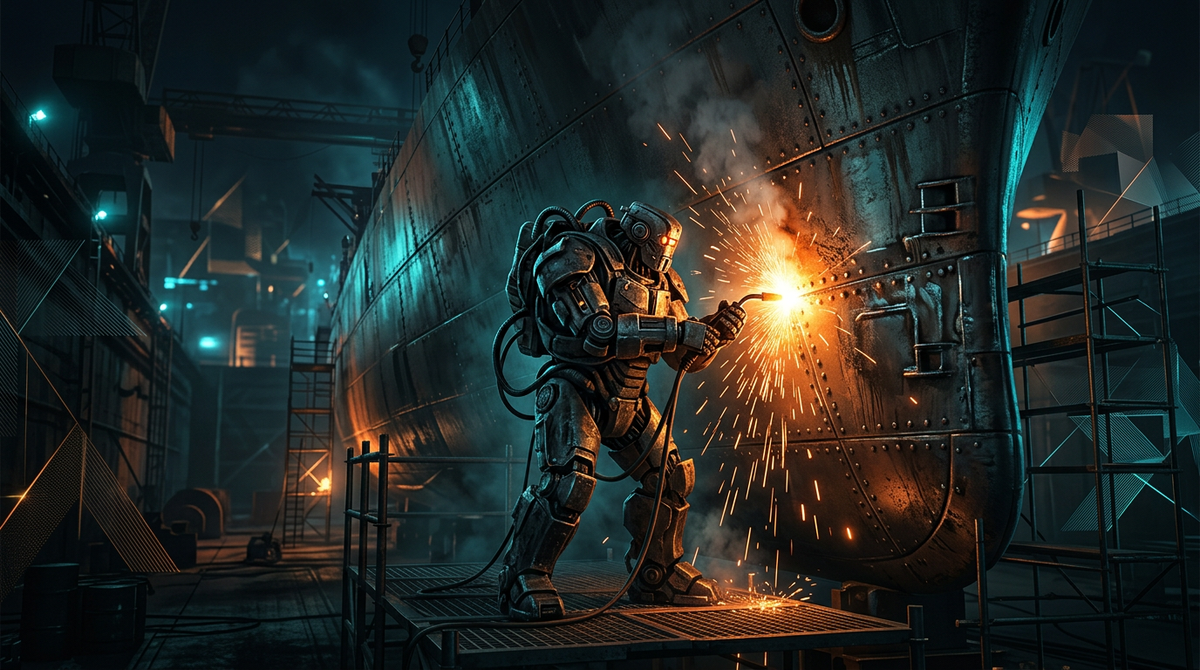
Humanoids Get a Job: The Shift to Industrial Shipyard Welding
The era of humanoid robots performing backflips for social media is giving way to a more pragmatic phase: the era of the robotic worker. Persona AI is leading this charge by deploying humanoid robots into one of the most demanding environments imaginable—the shipyard. Specifically, these robots are being trained for welding, a high-skill, high-risk job that faces a chronic shortage of human labor. Unlike generic industrial arms, humanoid forms can navigate the cramped, irregular spaces of a ship’s hull designed for humans.
Welding in a shipyard is not just about the weld itself; it’s about the mobility required to reach the workpiece and the dexterity to operate in non-standard positions. By utilizing a humanoid form factor, Persona AI allows its robots to use the same ladders, walkways, and tools as human welders. This minimizes the need for expensive infrastructure changes within the shipyard, making the transition to automation smoother and more cost-effective.
This deployment represents a milestone for robotics. It moves the conversation away from "can a robot move like a human?" to "can a robot work like a human?" The focus on a specific, high-value task like welding provides a clear ROI for shipbuilders and a roadmap for other heavy industries. As these robots prove their utility in the sparks and heat of the shipyard, they pave the way for humanoids to become a standard fixture in global manufacturing and construction.
Source: IEEE Spectrum