From Grid to Gate: The 800V Power Revolution in AI Semiconductors
As AI factories scale, the bottleneck has shifted from logic to power. New 800VDC architectures are bringing power delivery closer to the gate, optimizing energy efficiency for the next generation of accelerators.
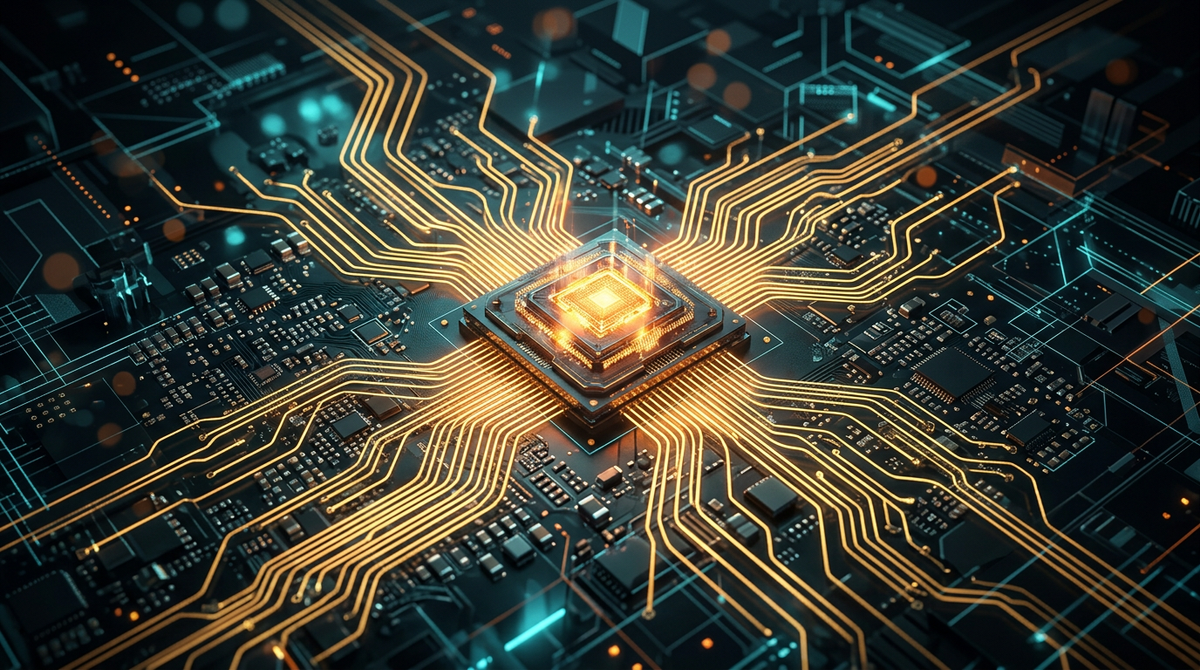
The semiconductor industry is facing a power crisis. As AI 'factories' grow to house hundreds of thousands of GPUs, the traditional methods of delivering electricity to the chip are no longer sufficient. The industry is now seeing a massive architectural shift toward 800VDC (Direct Current) power designs, moving the conversion process as close to the silicon gate as possible.
Historically, power conversion from the grid to the processor involved multiple stages, each leaking energy as heat. By pushing higher voltages deeper into the rack and using advanced 2.5D and 3D chiplet architectures, engineers are reducing 'voltage droop'—a phenomenon where the power supply dips during high-intensity compute cycles, leading to errors or throttled performance. Research from Washington State and UW-Madison is now focusing on 'ReVolt' systems that make power delivery networks aware of the compute load in real-time.
This isn't just about efficiency; it's about the physical limits of scaling. We are reaching a point where the bottleneck for AI performance isn't just the number of transistors on a die, but the ability to feed them enough energy without melting the substrate. Advanced materials like 4H-SiC (Silicon Carbide) and new 2D CFET scaling techniques are being utilized to manage these thermal and electrical loads. In the AI era, power engineering is becoming just as critical as logic design in the semiconductor roadmap.
Source: Semiconductor Engineering